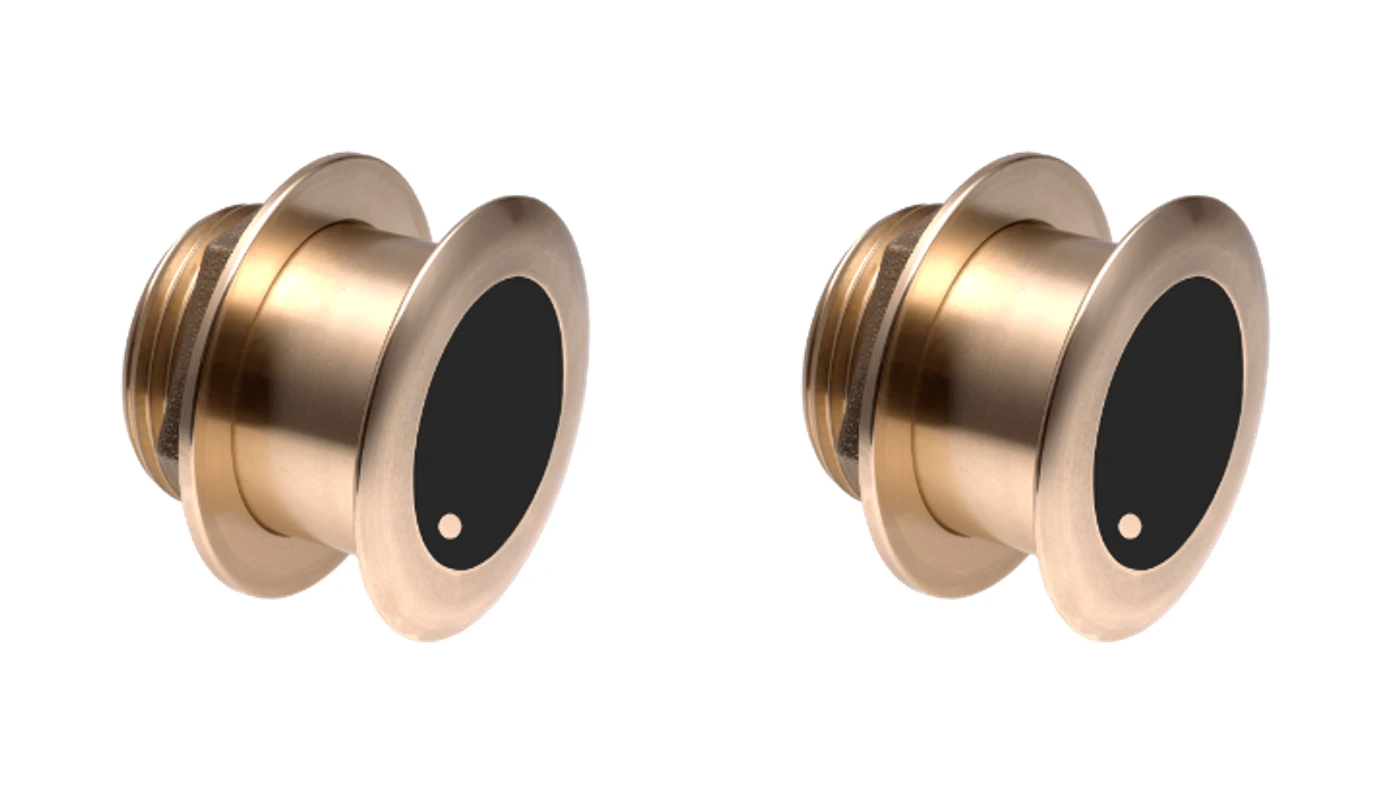
Best Transducers for 600–1,500 Feet: Deep-Water CHIRP, Power and Hull Fit
For regular deep-water work, compare low and medium CHIRP as part of the installed system. A maximum-depth number is useful for screening, but it does not establish target detail near bottom.
The quick answer
Shortlist B175L for a supported low-band, low-profile installation. Keep B175M as a medium-band alternative where the intended task and local evidence justify it. Price B265LH separately when a dual-band fairing installation fits the hull and sounder.
Affiliate disclosure: As an Amazon Associate I earn from qualifying purchases. Read the disclosure. Amazon links on this page are model searches; match the exact package before ordering.
Quick picks
How we chose
Research basis: This is a researched buying guide, not a hands-on test. Manufacturer documents support specifications; recommendations and evaluation routines are editorial judgments. No matched sea trial or catch comparison is claimed. Exact regional offers and installation compatibility still need checking before purchase. About ReefReadyGear and its editorial standards.
- Compare the complete installation against the intended fishing job.
- Keep published limits separate from demonstrated performance.
- Identify compatibility and evidence gaps before making a purchase.
Find your situation
| Your priority | Starting point | Verify before buying |
|---|---|---|
| Low CHIRP in a low-profile installation | Airmar B175L | Supported low-frequency channel and hull material |
| Medium CHIRP and deeper regular work | Airmar B175M | Connector, tilt and results at the intended depth |
These are editorial starting points. The detailed sections below explain the evidence and limits.
Specifications that matter
| Option | Published specification | Purchase check |
|---|---|---|
| Airmar B175L | 1 kW; 40–60 kHz; 32°–21° beam; published maximum 2,500 feet | Supported low-frequency channel and hull material |
| Airmar B175M | 1 kW; 85–135 kHz; 16°–11° beam; published maximum 1,500 feet | Connector, tilt and results at the intended depth |
Specifications: Airmar B175L; Airmar B175M. Maximum figures are manufacturer claims, not results measured for this guide.
Products in detail
Airmar B175L
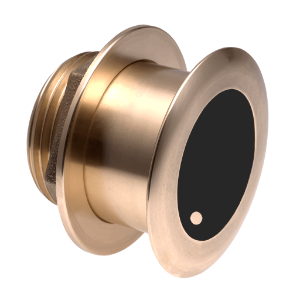
Check B175L 20° — cable required
Model search, not a verified offer. Check the seller, exact components and availability.
The B175L brings low-frequency CHIRP to the tilted-element family. Airmar lists a 40–60 kHz band and a 2,500-foot maximum. This is a useful candidate to discuss for deeper regular fishing, but the specification does not establish the visibility of a small target close to bottom on your installation.
Manufacturer specifications and package information
Pros
- A low-band option without a large external fairing.
- Published depth headroom beyond the 1,500-foot end of this guide.
Trade-offs
- A different beam and frequency trade-off from medium or high-wide CHIRP.
- Requires a sounder that supports the exact transducer and connection.
Buying verdict: Shortlist it for deeper low-band work when a qualified installer confirms a suitable low-profile location.
Airmar B175M
Check B175M 0° — cable required
Model search, not a verified offer. Check the seller, exact components and availability.
The B175M uses medium CHIRP with a beam that varies from 16 to 11 degrees across its band. Airmar lists a 1,500-foot maximum. Its narrower footprint and different frequency band make it a different tool from the B175HW, even though both belong to the same low-profile housing family.
Manufacturer specifications and package information
Pros
- A published depth ceiling beyond the B175HW’s 500-foot figure.
- Tilted-element variants allow the installer to account for hull deadrise.
Trade-offs
- Less geometric coverage than the high-wide model at an equal depth.
- The maximum-depth figure does not guarantee useful fish marks near that limit.
Buying verdict: Start here for medium-band work; require installation and local-depth evidence before treating the stated ceiling as your everyday result.
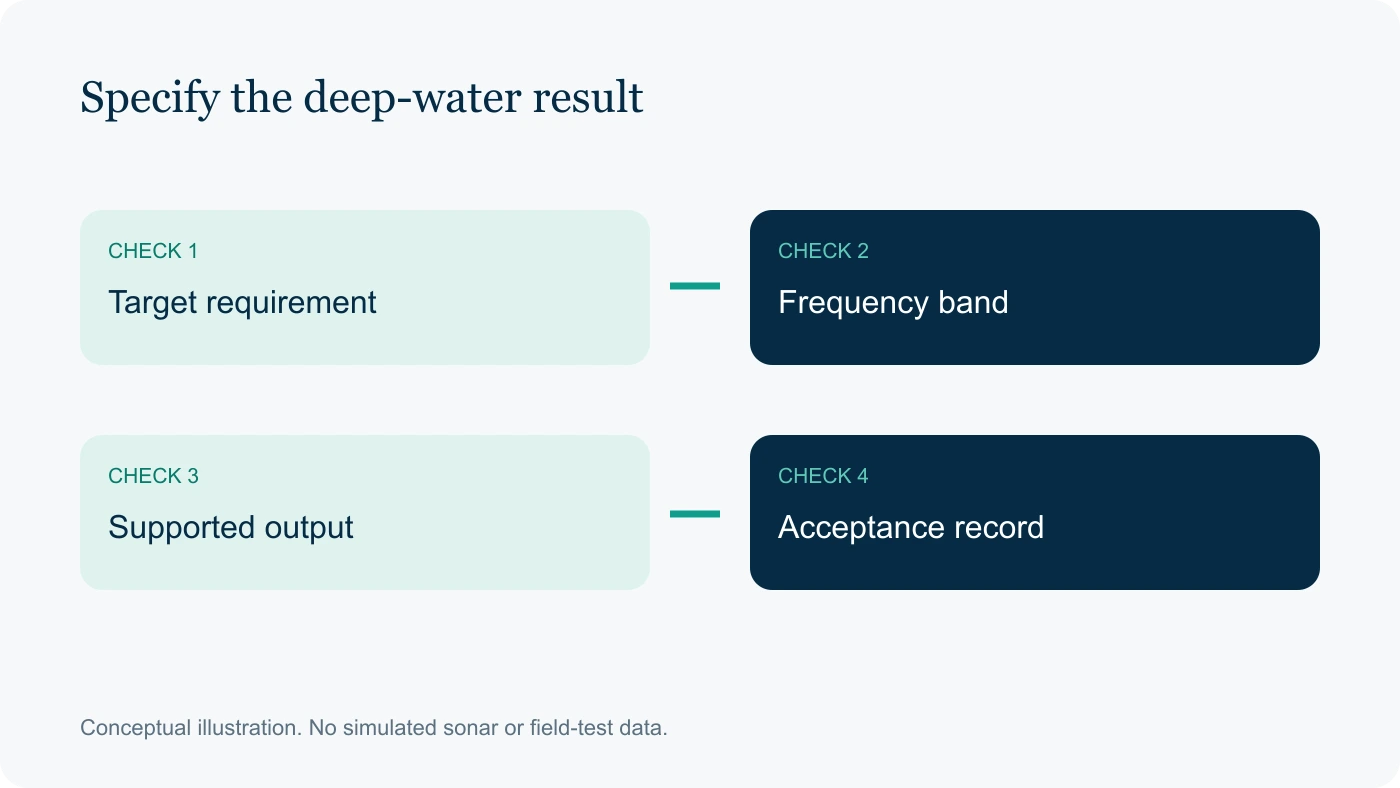
Set the regular working depth and target requirement
Write the normal operating depth and the result you need at that depth. Tracking bottom and separating a target near it are different requirements. A listed maximum can help exclude unsuitable candidates but cannot stand in for evidence of the more demanding task.
For 600–1,000 feet and 1,000–1,500 feet, ask the installer for examples from comparable equipment and conditions. These are editorial planning bands. They should not become claims that a transducer abruptly changes behavior at a particular boundary.
What the available evidence establishes
The linked specifications identify the equipment and its stated limits. They do not establish a controlled performance comparison on your boat. Use the suggested checks to resolve the purchase decision, and keep any future observations tied to their settings and conditions.
Compare low and medium bands in the supported system
B175L and B175M use different frequency bands and beam angles. Check the sounder’s support for the exact candidate before considering its published depth figure. Keep the transducer rating separate from what the connected sounder can supply and control.
A B265LH route introduces dual-band capability and a fairing installation. Larger specialist equipment can introduce still more substantial hull and system requirements. Do not rank every model by depth ceiling while ignoring whether the boat has an appropriate installation location.
Supporting documents: Low-frequency candidate specifications; Medium-frequency candidate and stated ceiling; Dual-band candidate requirements; Large-system physical scale and intended vessel context.
Plan hull work and service access
Have a qualified installer inspect hull material, mounting location, deadrise and water flow. Compare the tilted-element proposal with any fairing-mounted alternative using the actual boat. The correct installation is a physical survey, not a decision made from the product photograph.
Check how the cable reaches the sounder and how the unit can be serviced. Record the exact connector and any adapter. Include power work and network changes if a new module is needed, and obtain a clear description of the complete supported configuration before hull work begins.
- Depth: Regular working band and seabed conditions.
- Required result: Bottom line versus recognizable target.
- Configuration: Band, sounder, connector and installation.
Agree on a deep-water acceptance record
Use conditions appropriate for a safe test and agree on the target and settings beforehand. Record a stationary observation, the normal fishing drift and reacquisition after a change in boat movement where practical. Keep the unsuccessful observations.
A repeatable log helps distinguish what was demonstrated from what remains an expectation. If the run only establishes bottom tracking, do not describe it as proof of fish separation at the same depth.
| Record | What to check |
|---|---|
| Depth | Regular working band and seabed conditions |
| Required result | Bottom line versus recognizable target |
| Configuration | Band, sounder, connector and installation |
| Evidence | Settings, motion, voltage and repeated observations |
Buying Verdict
Shortlist it for deeper low-band work when a qualified installer confirms a suitable low-profile location.
Start here for medium-band work; require installation and local-depth evidence before treating the stated ceiling as your everyday result.
Is B175M ruled out at the deeper end?
Its published maximum does not automatically prove or disprove useful performance for your particular task there. Treat regular operation near the listed ceiling as a decision requiring relevant evidence. Compare the low-band route and installation before committing to the medium-band option.
When should you choose a complete system instead?
Move to the deep-drop system guide when the existing sounder or display cannot support the transducer the job requires. Comparing transducer-only prices then misses the larger purchase. Obtain a complete display, module, transducer and installation quotation.
Frequently asked questions
What is the best transducer for 600–1,500 feet?
Build the shortlist from the required working depth, supported sounder and available hull space. Compare suitable low-frequency and dual-band candidates, then verify installation and real-water evidence. A published maximum depth does not prove useful bottom detail throughout this range. Check the conditions and limitations behind a recommendation before treating it as suitable for your boat and regular fishing depth.
Should you choose low or medium CHIRP for deep water?
Check the specific transducer and task rather than treating the frequency label as a complete recommendation. Compare documented ratings, beam characteristics and supported sounder output. For regular work near a model’s published limit, require stronger installation and field evidence. Keep bottom tracking separate from resolving individual targets close to the seabed.
Will a larger multi-kilowatt transducer fit a small offshore boat?
Verify the housing dimensions, weight, fairing, hull compatibility and service access before treating a large transducer as an upgrade option. An installer should assess the actual boat and mounting position. Include supporting sounder hardware, wiring and installation costs. More rated power does not remove physical fit limits or establish better results on every hull.
Final verdict
Before ordering, resolve supported low-frequency channel and hull material for Airmar B175L, or connector, tilt and results at the intended depth for Airmar B175M. Choose the documented installation that answers your regular fishing requirement. Leave the purchase open if a required compatibility or performance question remains unresolved.
Related reading
Sources
Manufacturer specifications and supporting documents. Consult the exact regional part number and manual before purchase.