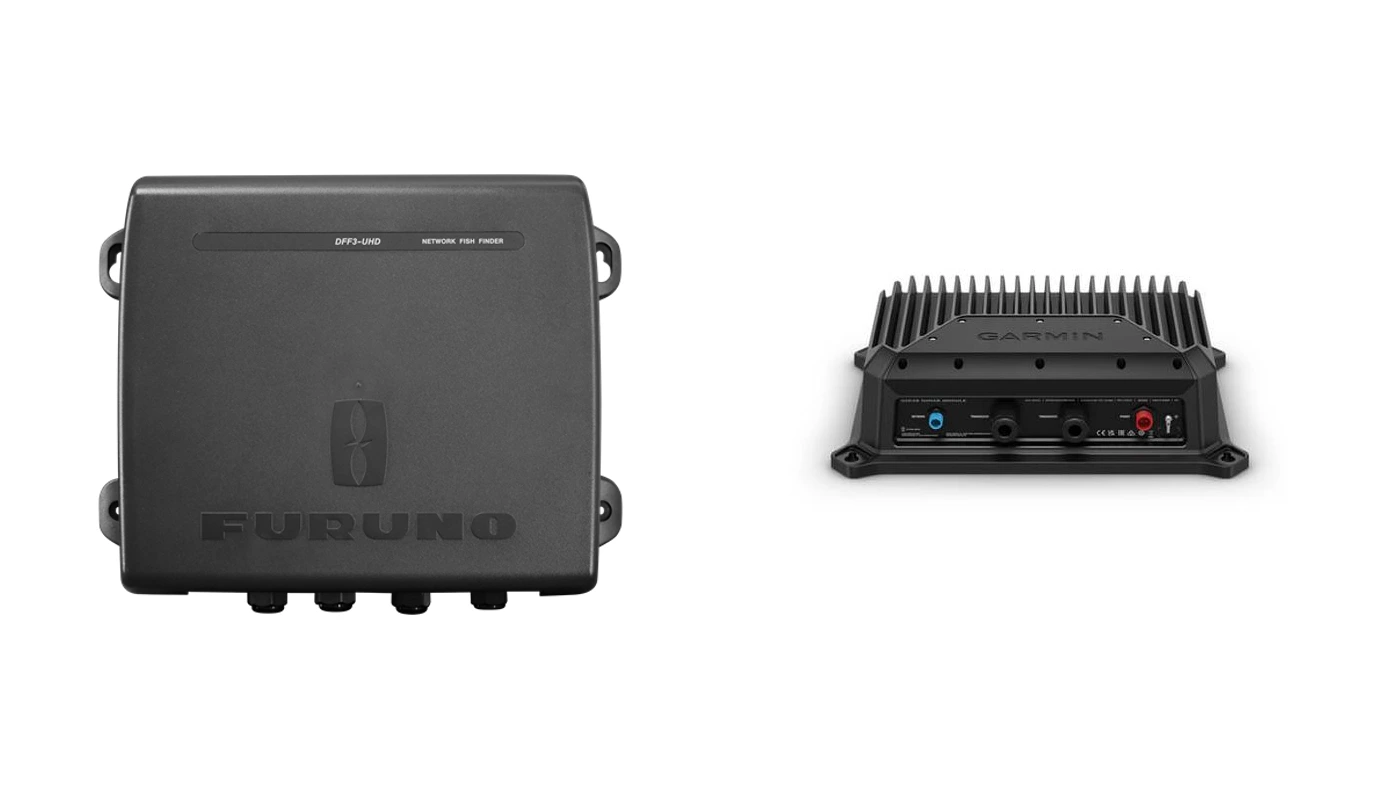
Best Fish Finders for Deep Drop Fishing: Complete Systems for 300–1,500+ Feet
A deep-drop system must do more than display a depth number. Start with the target you need to see, then match the sounder, transducer and hull installation before choosing the screen.
The quick answer
Shortlist Furuno DFF3-UHD with a supported TZtouchXL display or Garmin GSD 28 with a compatible GPSMAP. Choose from the transducer and installation outward. Neither a larger screen nor a higher power rating establishes useful fish detection at your deepest regular grounds.
Affiliate disclosure: As an Amazon Associate I earn from qualifying purchases. Read the disclosure. Amazon links on this page are model searches; match the exact package before ordering.
Quick picks
How we chose
Research basis: This is a researched buying guide, not a hands-on test. Manufacturer documents support specifications; recommendations and evaluation routines are editorial judgments. No matched sea trial or catch comparison is claimed. Exact regional offers and installation compatibility still need checking before purchase. About ReefReadyGear and its editorial standards.
- Compare the complete installation against the intended fishing job.
- Keep published limits separate from demonstrated performance.
- Identify compatibility and evidence gaps before making a purchase.
Find your situation
| Your priority | Starting point | Verify before buying |
|---|---|---|
| A Furuno system built around a supported deep-water transducer | Furuno DFF3-UHD with TZtouchXL | Exact display, transducer, network and installation quote |
| A Garmin network with an external sounder | Garmin GSD 28 with compatible GPSMAP | Exact GPSMAP model and transducer support |
These are editorial starting points. The detailed sections below explain the evidence and limits.
Specifications that matter
| Option | Published specification | Purchase check |
|---|---|---|
| Furuno DFF3-UHD with TZtouchXL | External TruEcho CHIRP sounder; supported 2/3 kW transducer configurations | Exact display, transducer, network and installation quote |
| Garmin GSD 28 with compatible GPSMAP | External CHIRP sounder; compatible GPSMAP and supported transducer required | Exact GPSMAP model and transducer support |
Specifications: Furuno DFF3-UHD with TZtouchXL; Garmin GSD 28 with compatible GPSMAP. Maximum figures are manufacturer claims, not results measured for this guide.
Products in detail
Furuno DFF3-UHD with TZtouchXL
Model search, not a verified offer. Check the seller, exact components and availability.
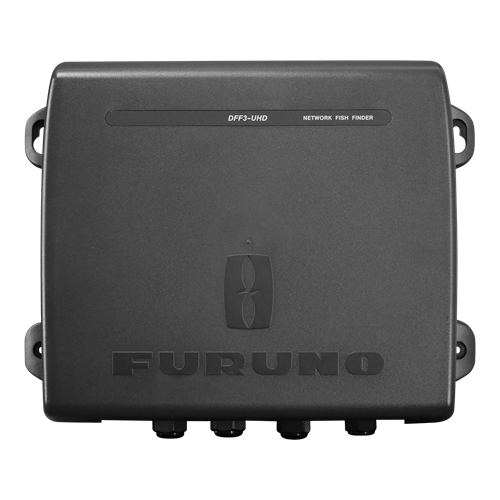
The DFF3-UHD is the sounder module in this route; the photograph does not show a complete fish-finder package. Pair it with a supported TZtouchXL display and a transducer on Furuno’s compatibility list. The quoted bill of materials must name that transducer rather than substituting a generic power rating.
Manufacturer specifications and package information
Pros
- The sounder and transducer can be specified as an explicit system.
- Furuno provides a supported-transducer list for checking the proposal.
Trade-offs
- Display, transducer and installation add to the module-only price.
- Hull space can rule out a proposed transducer before sonar power does.
Buying verdict: Choose this route when the compatible transducer fits the hull and the complete Furuno quote meets your fishing requirements.
Garmin GSD 28 with compatible GPSMAP
Check GSD 28 module only on Amazon
Model search, not a verified offer. Check the seller, exact components and availability.
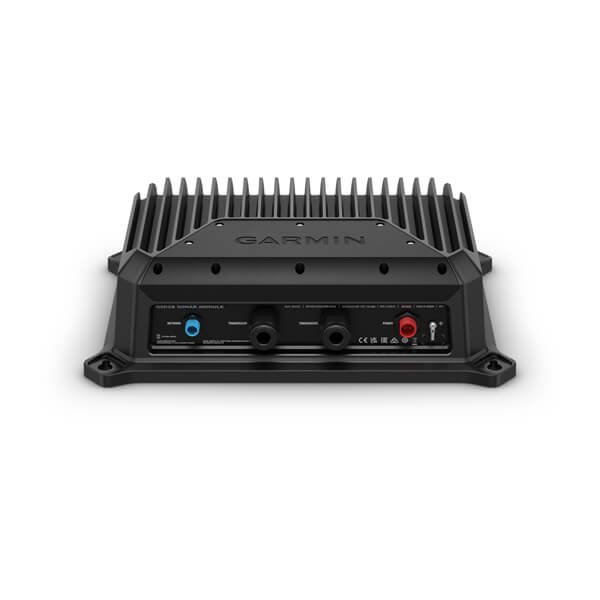
The GSD 28 is a separate sonar module, not a display or transducer bundle. Start with Garmin’s compatibility information for your exact GPSMAP, then identify the transducer, connectors and network parts. Do not infer support merely because an existing display carries a Garmin logo.
Manufacturer specifications and package information
Pros
- A candidate for a compatible GPSMAP installation.
- Separates sounder selection from the physical display size.
Trade-offs
- It is not a drop-in upgrade for every Garmin chartplotter.
- Optional capabilities can require additional hardware and installation.
Buying verdict: Keep the Garmin route on the shortlist when documented compatibility allows you to retain useful existing equipment.
Start with your deepest regular fishing depth
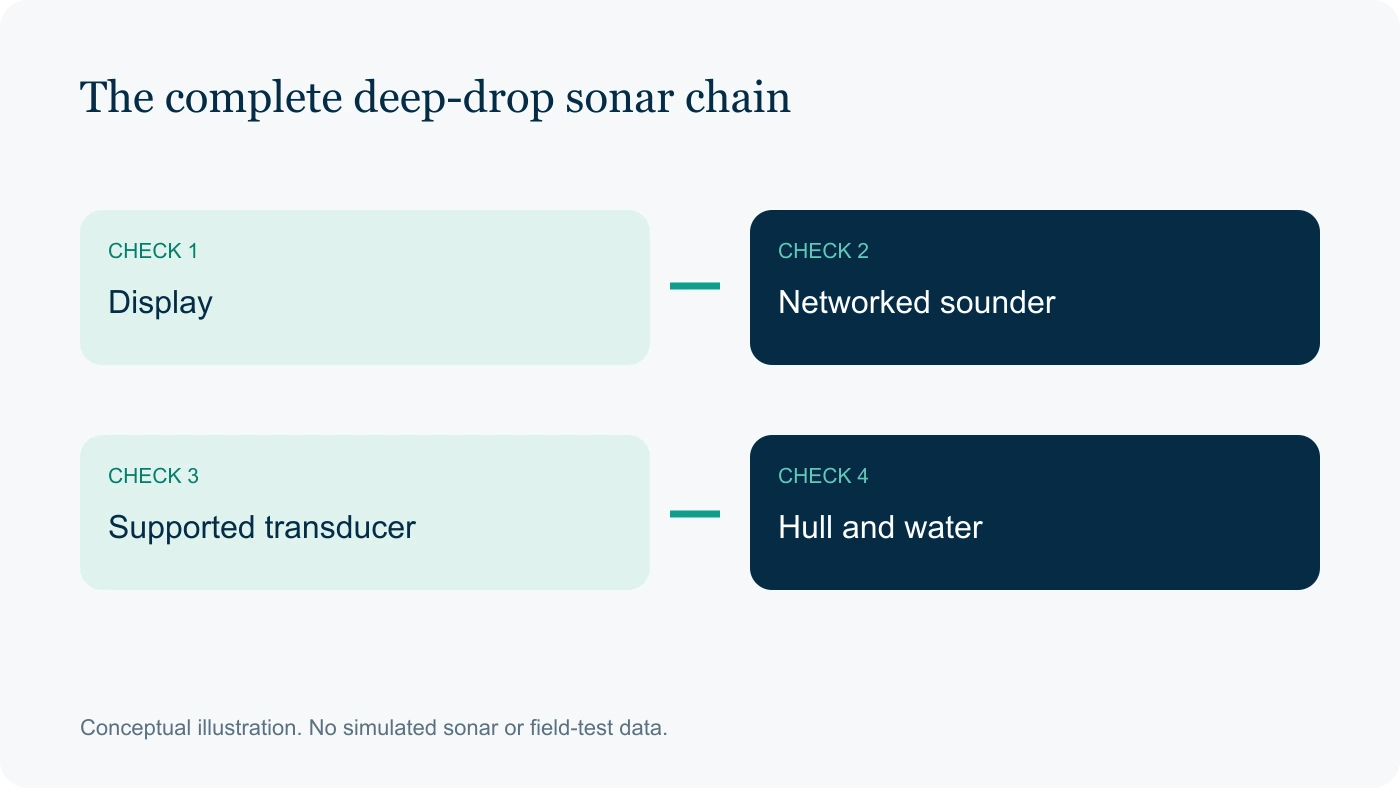
Separate the seabed depth from the depth of the fish or bait you want to see. A system that draws a bottom line has answered a different question from one that separates a target close to that bottom. Specify both outcomes in the installer’s proposal.
For planning, use 300–600, 600–1,000 and 1,000–1,500+ feet as working bands. These are editorial divisions, not manufacturer boundaries. A boat regularly fishing the deepest band needs a different evidence standard from one making occasional exploratory drops. Ask to see results from a comparable installation at the depth that drives your purchase.
What the available evidence establishes
The linked specifications identify the equipment and its stated limits. They do not establish a controlled performance comparison on your boat. Use the suggested checks to resolve the purchase decision, and keep any future observations tied to their settings and conditions.
Choose the transducer before judging the screen
Use the sounder manufacturer’s supported-transducer list to identify the actual candidate. Record its band, power rating, connector and mounting requirements. Only then check whether the intended display and sounder support that combination.
A low-profile transducer and a large fairing-mounted transducer can require very different hull work. Let the installer inspect hull material, deadrise, clean-water access and service clearance before you order. A transducer that cannot be installed properly is not a usable upgrade, regardless of its published depth figure.
Supporting documents: Supported Furuno sounder output, displays and transducers; GSD 28 channel power and optional heave-compensation hardware; TZT10X built-in sonar and expansion; Low-frequency tilted-element candidate.
Test bottom lock and fish detection separately
A useful acceptance run records the installation rather than producing a single impressive screenshot. Agree on a practical route with the installer and record both successful and unsuccessful passes. Repeat comparable settings after any adjustment so that a change in sea state is not mistaken for a hardware improvement.
Start with a stationary baseline, then examine a controlled drift and suitable operating speeds. Record depth, voltage under load, gain and range settings. Keep bottom continuity separate from recognizable fish-target evidence; if no known target is available, record that limitation instead of assigning a detection score.
- Display and network: Exact model, software and adapters.
- Sounder and transducer: Supported pair and chosen frequency bands.
- Hull work: Mount, fairing or tilt, cable route and labor.
Compare complete installed quotes
Retaining a compatible display can be sensible, but only after its model and software are confirmed. A new module can still need network adapters, power work, a different transducer and labor. Compare two complete routes to the same fishing requirement.
Use the worksheet below to expose omissions. Leave unavailable prices unpriced rather than treating them as zero. A cheaper quotation with no transducer installation or sea-trial allowance is not yet a comparable quotation.
| Record | What to check |
|---|---|
| Display and network | Exact model, software and adapters |
| Sounder and transducer | Supported pair and chosen frequency bands |
| Hull work | Mount, fairing or tilt, cable route and labor |
| Acceptance run | Depth, conditions and agreed evidence |
Buying Verdict
Choose this route when the compatible transducer fits the hull and the complete Furuno quote meets your fishing requirements.
Keep the Garmin route on the shortlist when documented compatibility allows you to retain useful existing equipment.
Does more power guarantee a better deep-drop result?
No. The proposed system still has to support the transducer and suit the installation. Treat power as one specification in a documented combination. Ask what practical result the installer expects at your target depth and what evidence supports that expectation.
Should you replace the display first?
Check whether the existing display can support the required sounder before replacing it. If the problem occurs only underway, have the mounting and water flow assessed too. A display purchase should follow diagnosis of the system, not stand in for it.
Frequently asked questions
What is the best fish finder for deep drop fishing?
Choose a complete sonar system around your normal fishing depth, hull and existing electronics. A display alone does not establish deep-water capability. Compare the sounder’s supported output and frequency with the exact transducer, then check installation requirements. Treat advertised maximum depth as a specification ceiling, not proof of fish detection at your grounds.
Do you need a 3 kW sounder for deep dropping?
Do not choose power from depth alone. Start with the target depth, suitable transducer, supported channels and available hull space. Compare a properly matched lower-power installation with the additional cost and fit requirements of a higher-power package. Require local evidence or a documented sea trial before choosing either configuration for your deepest regular fishing.
Why does a fish finder lose bottom in deep water?
First record whether the loss occurs at rest, while drifting or only underway. Check transducer selection, range settings, voltage under load and installation history before replacing the display. A qualified installer should inspect mounting and potential aeration. Repeat the same route and settings after each change so the cause is distinguishable from changing conditions.
Final verdict
Before ordering, resolve exact display, transducer, network and installation quote for Furuno DFF3-UHD with TZtouchXL, or exact gpsmap model and transducer support for Garmin GSD 28 with compatible GPSMAP. Choose the documented installation that answers your regular fishing requirement. Leave the purchase open if a required compatibility or performance question remains unresolved.
Related reading
Sources
Manufacturer specifications and supporting documents. Consult the exact regional part number and manual before purchase.