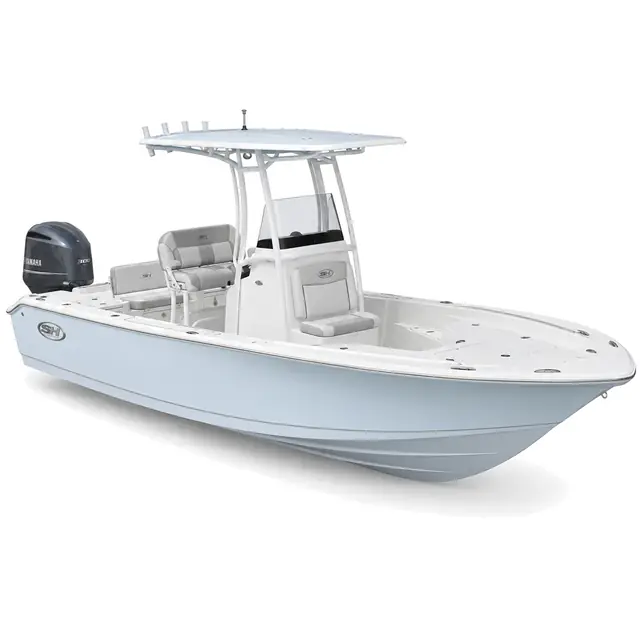
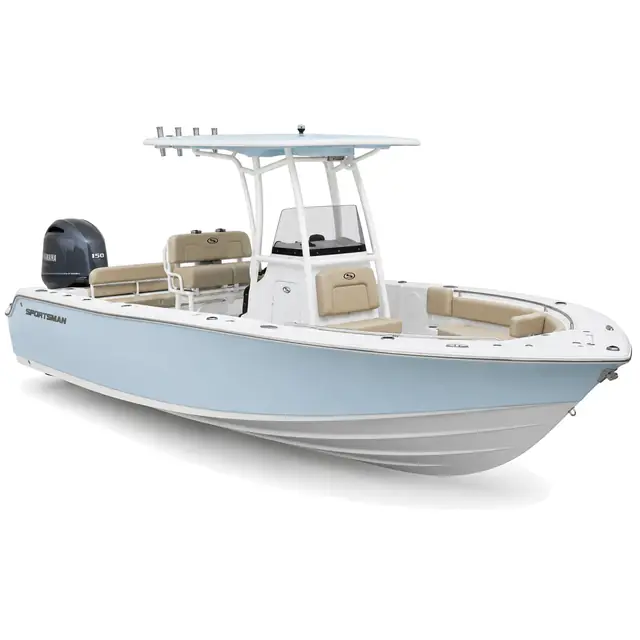
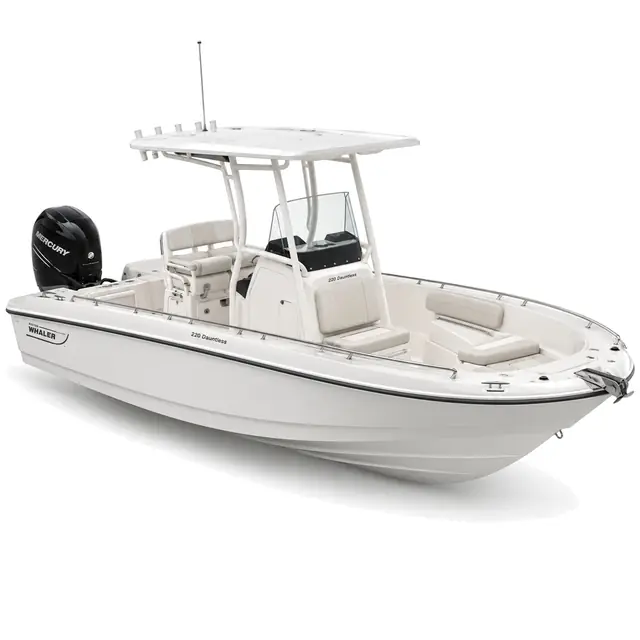
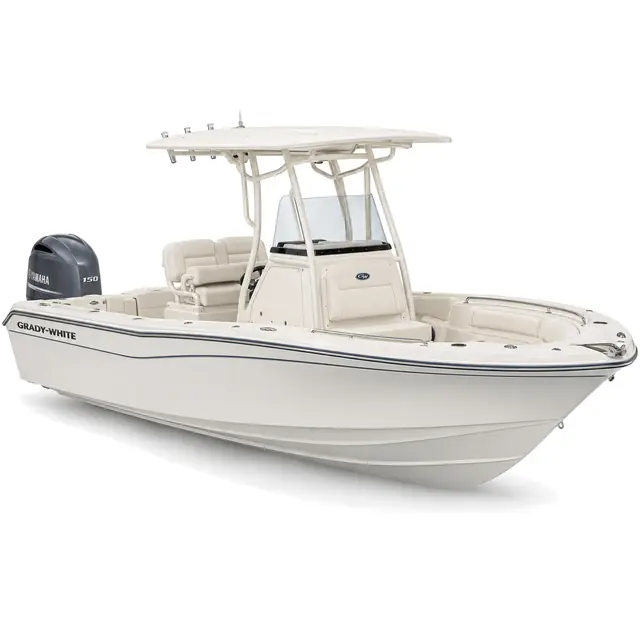
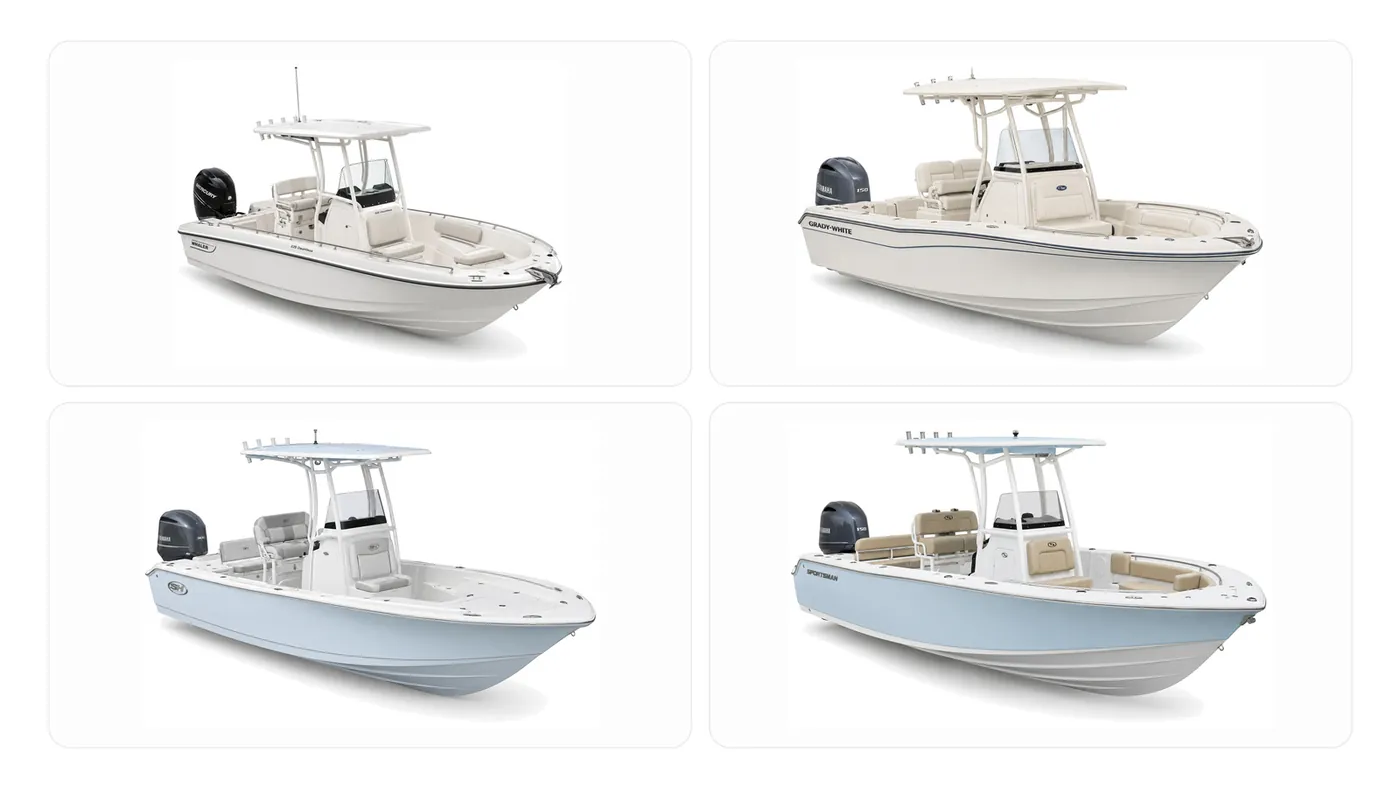
The center consoles reviewed below: Sea Hunt BX 22 BR, Sportsman Open 212, Boston Whaler 220 Dauntless and Grady-White Fisherman 216. Manufacturer product photography.
Best 19 to 22 Foot Center Consoles for Inshore and Offshore Fishing: What "Offshore" Actually Means
There are two Saturdays that define this size of boat. On the first one you are running eight inches of water in the back of a marsh, poling the last stretch to a redfish tailing on a falling tide.…
By Larry MurrayUpdated 6 September 202621 min readBuyer’s Guide
The quick answer
Offshore is a range, a sea state and an equipment list, not a hull length. The one-third fuel rule turns a marketing claim into a number you can plan a day around: a third out, a third back, a third in reserve.
Want a dealer to talk you through any of these in person? Request a local quote and we will connect you at no cost.
Affiliate disclosure. Boat lead generation, not an affiliate program. ReefReadyGear does not sell boats and does not earn a commission on the boats below. Where you see a dealer inquiry link, it connects you to the builder or a local dealer at no cost to you. Every specification in this guide was pulled from builder pages and dated, and we say where a figure still needs confirming with your dealer before you sign anything. Specifications verified September 2026.
What offshore actually means
Range, sea state and required equipment define offshore capability, and all three can be checked before you sign anything. This page defines them numerically, then places each boat against that definition rather than against a brochure adjective.
ReefReadyGear does not run a testing programme, and nothing on this page is presented as a first-hand test result.
Every figure here is drawn from manufacturer and builder documentation, authorised retailer listings and published
angler experience, verified in September 2026 and dated where it matters. Where a number is our calculation rather
than a published figure, we label it and show the method.
Practical range calculated with the one-third fuel rule, using published fuel capacity and realistic burn
Offshore defined numerically by range, sea state and equipment before any boat was ranked
Coast Guard equipment requirements and NOAA forecast products cited for the safety and sea-state sections
The honest alternative priced out, including the case for buying a bay boat and chartering the offshore days
Where two authoritative sources disagree, both are quoted and attributed rather than blended, and where a maker
publishes no figure at all we say so instead of estimating quietly.
There are two Saturdays that define this size of boat. On the first one you are running eight inches of water in the back of a marsh, poling the last stretch to a redfish tailing on a falling tide. On the second you are eighteen miles out, working a color change over a nearshore reef, and the wind that was nothing at 7 a.m. has built into something you are now timing your run home around.
Every builder in this class will tell you their boat does both. That is the marketing claim this article exists to test.
“Offshore” is not a hull property. It is a distance and a forecast. A 21 foot center console with a 60 gallon tank has a practical fishing radius of roughly 30 to 40 miles once you apply the one-third rule that competent boaters actually use, and its usable sea state on any given day is set by the morning marine forecast, not by the number on its spec sheet. Meanwhile the same deadrise that lets it ride a two foot chop comfortably keeps it from floating in a foot of water. This class cannot be optimized for both ends, only balanced between them, and the real job in front of you is deciding which end you will actually fish more.
This guide publishes the range calculation nobody else in this category runs, defines what “offshore” honestly means at 19 to 22 feet, and scores four boats on both halves of the compromise so you can see where each one actually sits.
What "offshore" actually means
In practice, for a 19 to 22 foot center console, “offshore” mostly means nearshore. These boats typically fish reefs, wrecks and weed lines within a comfortable return of an inlet, in settled conditions, with a watched forecast. That is a genuine and productive fishery. It is not the same activity as running 60 miles to blue water, and the category uses one word for both.
Three bands are worth separating, because the equipment and judgment each one calls for are different:
Inshore and protected. Marshes, bays, sounds and the water behind barrier islands. Wind chop, not swell, is the concern, and this is where the shallow-draft half of this class earns its keep.
Nearshore. Roughly the water between an inlet and 20 to 25 nautical miles out, depending on coastline. Reefs, wrecks and weed lines live here, and it is where a 19 to 22 foot center console actually spends most of its “offshore” days.
Offshore proper. Blue water and canyon edges, well outside a quick return if the weather turns or the engine quits. That is a different boat’s job. A single-engine 21 footer running 50 or 60 miles out is not what this class was built for.
Define your trip by distance and forecast, not by the word on the brochure, and the rest of this decision gets much easier.
How far can you really go?
This is the number every competing list skips, because it is not a flattering one to publish.
The method
Take the boat’s usable fuel capacity, slightly less than the tank’s rated size since a small reserve is never truly recoverable.
Divide by a realistic cruising burn rate in gallons per hour, not the best-case figure from a builder’s performance bulletin.
Multiply by cruising speed to get total one-way range on a full tank.
Apply the one-third rule: a third of fuel to run out, a third to run back, a third held in reserve for wind, current or simply being wrong about the first two numbers. That reserve is not conservatism for its own sake. It is standard small-boat practice, and it turns a bad afternoon into a story instead of an incident.
The one-third rule effectively divides your total one-way range by three, since the distance you cover on the outbound third is roughly what you need to cover again to get home.
Builder performance bulletins are measured light, at optimal trim, often with one person aboard. Add a full crew, a loaded livewell, ice, tackle and a chop on the way home, and realistic burn climbs well above the brochure number. The figures below already reflect that.
The practical range table
Boat
Fuel capacity
Usable fuel
Realistic cruising burn
Cruise speed
Total one-way range
Practical fishing radius
Sea Hunt BX 22 BR
53 gal
48 gal
14 gph
26 kn
89 nm
about 30 miles
Sportsman Open 212
70 gal (60 gal usable, per builder)
60 gal
15 gph
24 kn
96 nm
about 32 miles
Boston Whaler 220 Dauntless
80 gal
76 gal
16 gph
24 kn
114 nm
about 38 miles
Grady-White Fisherman 216
80 gal
76 gal
18 gph
26 kn
110 nm
about 37 miles
Every figure in this table is our calculation, not a builder claim, with the method shown above so you can rerun it for your own boat, load and inlet. Fuel capacities are from builder specification pages, dated at the top. Burn rates are realistic estimates for a loaded four-angler trip, not brochure figures, and should be confirmed against your specific engine and prop during a sea trial.
A practical fishing radius in the low 30s to high 30s of nautical miles is the honest range for this entire class. That reaches most nearshore reefs, wrecks and weed lines along most coastlines. It does not reach blue water.
Range shrinks on the leg that matters. Wind typically builds through the day. A flat run out at 7 a.m. is frequently a following sea or a headwind by 2 p.m., and a headwind home burns noticeably more fuel than the same distance run flat. Plan the return leg on the worst conditions you might reasonably see that afternoon, not the conditions you left in.
The honest number for this class is 30 to 38 miles, and no brochure prints it.
What offshore capability costs you inshore
Every degree of deadrise that improves the ride on the way to a reef is a degree that raises the boat off the bottom and keeps it out of skinny water. This is the same physics the flats and bay boat skiff guide covers from the shallow-water side; here it decides how much of your inshore access this “crossover” boat actually keeps.
Freeboard cuts the same way. More freeboard keeps water out of the boat in a chop, and it also catches more wind on a flat, making precision poling or drifting into a redfish school harder than on a lower-sided bay boat. A T-top that is genuinely useful for sun and rain offshore adds windage that works against you that same afternoon on the flat.
None of this is a flaw in any specific boat. It is the trade every builder in this class is making, whether or not the marketing copy says so. Choose the deadrise and freeboard by which fishery you will actually fish more often. If shallow water matters more than offshore reach, our best bay boats under 20 feet guide covers that end directly, and the deeper physics of draft and deadrise live in the flats and bay boat skiff guide rather than being repeated here.
Freeboard, scuppers and a cockpit that drains
Deadrise gets most of the attention in this class. Freeboard and drainage matter more to real seaworthiness at 19 to 22 feet, and almost nobody compares them.
Freeboard is the first line against a boarding sea, the gunwale height above the waterline that keeps a wave crest out of the cockpit rather than over it. A boat with generous freeboard forward and a lower transom for fish-fighting access is making a reasonable trade, but it is worth knowing which parts of the hull sit lower before you are in a following sea.
Self-bailing cockpits only work up to a point. These hulls are designed so the cockpit sole sits above the waterline and drains through scuppers by gravity. Load the boat down, put four anglers standing aft for a photo or a fight, and the stern squats. Past a certain point the scuppers submerge, and a cockpit that drained perfectly at the dock stops draining entirely when it matters most.
The sea trial check almost nobody runs: ask the dealer to put four people aboard, standing aft near the transom, and watch the scuppers. Still above the waterline, the boat has real reserve. At or below it, you just learned something no spec sheet tells you, in thirty seconds.
The weather window, not the boat
A 19 to 22 foot center console’s usable conditions are set by the forecast, not by its specification sheet. No seller volunteers that framing, because it does not sell a boat. It is also true.
Wave height is the number everyone checks. It is not the whole picture. Wave period, the time between wave crests, matters as much or more. A three foot swell at ten seconds is a gentle roller; a three foot chop at four seconds is short, steep and closely spaced, and it is what actually stops a small boat, because the hull never settles between crests. Two forecasts can carry the same wave height and be completely different days on the water.
The NOAA National Weather Service marine forecast is the source to check, not a general weather app. Look at the nearshore or coastal waters forecast for wind, wave height and dominant period; any small craft advisory, issued when conditions are expected to be hazardous to smaller vessels; and the forecast discussion, which usually explains whether a front, a sea breeze, or wind against tide is driving the numbers, since those causes behave differently through the day.
A sea breeze is worth planning around specifically. Coastal wind is often light in the morning and builds through the afternoon as land heats up, which is why the run out feels easy and the run home does not. Plan your fuel reserve around the forecast for your return time, not your departure time.
We are not going to tell you that a specific boat is safe at a specific distance or sea state, and no honest source will. The Coast Guard, NOAA and this article can give you a framework and the sources to check. The judgment about whether today’s conditions match your boat, crew and experience belongs to you, on the dock, with the current forecast in hand. That is not a disclaimer. It is the actual job.
The best 19 to 22 foot center consoles
Category boundary, stated plainly: 19 to 22 feet LOA, center console configuration, single outboard power, evaluated for a buyer who intends to run offshore into the nearshore band described above, not just fish protected water. Boats grouped inshore-leaning, balanced, and offshore-leaning by deadrise, freeboard and practical range together, not by any single number.
A note on the overlap with our bay boat guide. A boat at 19 to 20 feet can legitimately appear in both this article and our best bay boats under 20 feet guide, written for the shallow-water-priority buyer. If shallow water access matters more to you than nearshore reach, that guide is the better one to finish reading.
Prices below are approximate base and typically-rigged figures. Dealer pricing moves constantly and varies by region and options, so treat these as a budgeting band, not a quote, and confirm current pricing with a dealer.
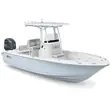
Sea Hunt BX 22 BR (inshore-leaning) — Strongest inshore case
Published specifications
LOA
22’10”
Beam
8’5″
Dry weight
2,700 lb
Fuel capacity
53 gal
Max horsepower
250 hp
Practical fishing radius
about 30 miles (our calculation)
Base price (approx.)
around $62,000
Typically rigged (approx.)
around $72,000
Sea Hunt’s published specifications do not list transom deadrise or draft. Bay-oriented hulls this size typically run 14 to 18 degrees; confirm the exact figure with a dealer.
Best for
Anglers whose fishing is mostly bays, flats and passes, who want a settled-weather nearshore trip a handful of times a season.
Key features
The BX series is built from Sea Hunt’s bay boat heritage, and at 2,700 pounds it is the lightest hull here, which helps efficiency and shallow-water handling but works against ride quality once the water builds.
Advantages
Lightest boat in this class, helping fuel efficiency and trailering
Bay-boat running surface handles skinny water and a following chop better than a deep-V of similar length
Limitations
Smallest fuel tank here at 53 gallons, capping range near 30 miles
Builder does not publish deadrise or draft; confirm before purchase
Real-world application, and who should buy or avoid it
Redfish and trout in the marsh most weekends, with an occasional settled-weather run to a nearshore reef inside 25 miles. Buy it if you fish inshore 80 percent of the time or more. Avoid it if you plan to fish nearshore structure regularly; the tank and hull both argue against it as a primary offshore boat.
Sportsman Open 212 (balanced) — Best overall balance
Published specifications
LOA
21’5″
Beam
8’6″
Transom deadrise
18 degrees
Draft (engine up)
16″
Dry weight
approx. 3,618 lb
Fuel capacity
70 gal (60 gal usable, per builder)
Max horsepower
250 hp
Person capacity
10
Practical fishing radius
about 32 miles (our calculation)
Base price (approx.)
around $68,000
Typically rigged (approx.)
around $80,000
Best for
The buyer who wants one boat that does not overcommit to either fishery, from a builder unusually transparent about its own numbers.
Key features
Sportsman is one of the few builders here to publish a usable fuel figure alongside the tank’s rated size, 60 usable gallons out of 70, which removes guesswork from the range calculation above. At 18 degrees of deadrise and a 10-person capacity, it sits genuinely in the middle of this lineup.
Advantages
Published usable fuel figure, a rare and useful disclosure in this category
10-person capacity, the highest here, and genuinely balanced deadrise and draft
Limitations
Heaviest dry weight in this lineup, affecting trailering
Not the deepest deadrise or the shallowest draft here
Real-world application, and who should buy or avoid it
A genuinely mixed schedule: bay and flat fishing most weekends, nearshore trips when the forecast allows. Buy it if you cannot honestly say you favor one fishery over the other. Avoid it if you already know you favor offshore heavily (more deadrise and freeboard serve you better) or shallow water heavily (a true bay boat serves you better).
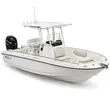
Boston Whaler 220 Dauntless (offshore-leaning) — Rare safety differentiator
Published specifications
LOA (centerline)
22’0″
LOA (with platforms)
23’4″
Beam
8’6″
Transom deadrise
18 degrees
Draft
15″
Dry weight
3,040 lb
Fuel capacity
80 gal
Max horsepower
250 hp
Person capacity
9
Practical fishing radius
about 38 miles (our calculation)
Base price (approx.)
around $92,000
Typically rigged (approx.)
around $105,000
Best for
Buyers who weight safety margin and unsinkable construction heavily in the offshore half of the decision, and who are willing to pay a premium for it.
Key features
Boston Whaler’s foam-cored, unsinkable hull construction is the genuine, relevant differentiator here. It does not change the range math or the deadrise trade, but it changes the consequence of the worst-case scenario those sections are implicitly about. The Dauntless line’s freeboard and cockpit are built around rough-water fishability rather than shallow-water access.
Advantages
Unsinkable foam-cored construction, a genuine and rare safety differentiator at this size
80 gallon tank supports a strong practical range, and Boston Whaler’s dealer network and resale value are well established
Limitations
Among the higher prices in this lineup
Not the shallowest-draft option here
Real-world application, and who should buy or avoid it
Nearshore reef, wreck and weed-line fishing as the primary use, with the unsinkable construction mattering most on the days the forecast was more optimistic than the water turned out to be. Buy it if you put real weight on that safety margin. Avoid it on a tighter budget, or if your fishing is primarily shallow water.
Grady-White Fisherman 216 (offshore-leaning) — Strongest offshore case
Published specifications
LOA (with platforms)
23’3″
Centerline length
21’3″
Beam
8’6″
Transom deadrise
19 degrees (SeaV2 hull)
Draft
16″
Dry weight
3,360 lb
Fuel capacity
80 gal
Max horsepower
300 hp
Practical fishing radius
about 37 miles (our calculation)
Base price (approx.)
around $95,000
Typically rigged (approx.)
around $108,000
Best for
Buyers who want the deepest deadrise and the highest rated horsepower here, and plan to fish nearshore water often enough to use both.
Key features
Grady-White’s SeaV2 hull carries a progressive deadrise, deeper toward the bow, and at 19 degrees at the transom it is on the deeper end of this class. Paired with a 300 hp rating, the highest here, and an 80 gallon tank, this is the boat built most explicitly around the offshore half of the compromise.
Advantages
Deepest transom deadrise here, which should translate to the most comfortable ride in a chop
Highest horsepower rating here, and a well-regarded build reputation with strong resale value
Limitations
Highest price in this lineup, and the heaviest dry weight among the offshore-leaning boats
The deeper deadrise that helps offshore works against shallow-water access the most of any boat here
Real-world application, and who should buy or avoid it
Regular nearshore trips to reefs, wrecks and weed lines, where the extra deadrise is genuinely earning its keep. Buy it if your split is weighted toward the offshore half and the budget works. Avoid it if your fishing is mostly inshore, where this boat’s deadrise and draft work against you most days.
Where each boat sits on the crossover
Plot each boat on two axes: inshore access, built from draft, hull shape and layout, against offshore capability, built from deadrise, freeboard and the practical range calculated above.
Boat
Inshore access
Offshore capability
Where it sits
Sea Hunt BX 22 BR
Highest
Lowest
Inshore-leaning
Sportsman Open 212
Average
Average
Balanced, genuinely centered
Boston Whaler 220 Dauntless
Below average
High, and higher still on safety margin
Offshore-leaning
Grady-White Fisherman 216
Lowest
Highest
Most offshore-leaning
No boat here occupies the top-right corner of both axes at once, and that is the article’s point rather than a gap in the research. A boat that maximized both would not be a crossover boat. It would be two boats pretending to be one.
What to carry once you leave the bay
Safety equipment at this size is a specification, not a footnote, and the requirement changes with distance. The table below separates what the U.S. Coast Guard requires from what competent operators carry beyond it. Treat the legal column as a floor, not a target.
Distance band
Legally required (U.S. Coast Guard)
Recommended beyond the legal minimum
Inshore and protected
Wearable life jacket per person, one throwable device, fire extinguisher, sound signal, navigation lights, visual distress signals on coastal waters
Handheld VHF backup, a basic float plan
Nearshore
Same legal minimums, since requirements scale with vessel length and water type, not distance offshore
Fixed VHF with DSC and a registered MMSI, current distress signals, a written float plan, first aid kit
Offshore proper
Same legal minimums; check state and vessel-specific rules before departure
PLB or EPIRB, DSC VHF as standard rather than optional, a ditch bag, a filed float plan, a crew conversation about what happens if the engine does not restart
Confirm current requirements for your vessel and state at uscgboating.org before relying on this table.
A registered DSC VHF does something a handheld without one cannot. Connected to GPS and registered with a Maritime Mobile Service Identity, it transmits your identity and position the moment you press the distress button. A handheld without DSC only transmits your voice, on whatever channel someone happens to be monitoring.
An EPIRB or PLB alerts through the international Cospas-Sarsat satellite network, which NOAA operates the U.S. portion of, and both need to be registered to be useful. A PLB is worn on the person and typically has a shorter battery life than a vessel EPIRB, which is why some offshore operators carry both.
A float plan costs nothing and changes the outcome of a bad day. Tell someone ashore where you are going, when you expect back, and who to call if you are not. It is the cheapest item in this table, and the one most people skip.
Here is the honest answer this article exists to give.
If you fish inshore forty weekends a year and offshore six, the math on a single crossover boat rarely favors the crossover. Run the comparison plainly:
A new 21 foot crossover, rigged, typically lands between $65,000 and $105,000 depending on builder and options, plus insurance, storage or a trailer, and annual maintenance on a hull and engine sized for offshore duty whether or not you use that capability most weekends.
A used bay boat plus six days of nearshore charter fishing a year frequently costs less overall, and gives you the shallow-water performance you will actually use most, with the offshore trips handled by someone whose boat, insurance and local knowledge are built for exactly that water. Six charter days at a typical nearshore rate is often smaller than the gap between a used bay boat and a new crossover.
A used bay boat plus a used, smaller nearshore-capable boat is the middle path, for buyers who want to own both ends rather than charter one, at the cost of two sets of insurance and maintenance instead of one.
None of these is universally right. The reader who fishes offshore six times a year and inshore forty is very often better served by the bay boat and the charter days than by the crossover this article otherwise walks through in detail. That is not the answer that sells a $90,000 boat, and it is the one we think this audience deserves to hear plainly before they sign anything.
The last question is the one that saves people the most money.
In practice, nearshore: reefs, wrecks and weed lines within a comfortable return of an inlet, in settled conditions with a watched forecast. That is a genuine, productive fishery, and not the same thing as running 60 miles to blue water.
Beyond the Coast Guard’s legal minimums, carry a fixed VHF with DSC and a registered MMSI, a personal locator beacon or EPIRB, appropriate visual distress signals, and file a float plan. Most of that list is not legally required. It is what separates an optimistic trip from a reasonable one.
That cannot be answered for a boat in the abstract. Safety at this size is a function of the specific boat, crew, equipment and the forecast that day. This guide gives you the range method, the safety framework and the sources to check; the judgment belongs to the operator, on the dock, with the current forecast.
No. Single-engine offshore fishing at this size is common and, for many buyers, the right economic choice. It is a genuine risk consideration on a longer nearshore run, one that a kicker motor, tow insurance and reliable communications partially offset rather than eliminate, against the added cost and weight of twins.
For a buyer who genuinely splits their fishing close to evenly, a single well-chosen crossover boat is often the right call. For a buyer who fishes inshore most of the time and offshore only occasionally, a used bay boat plus a handful of charter days a year is frequently the better financial answer, and it deserves real consideration before you commit to a new crossover boat.
Either alerts through the same Cospas-Sarsat satellite system, and either beats neither. A PLB is worn on your person, which matters if you and the boat separate, and typically has a shorter battery life than a vessel EPIRB. Many offshore-minded owners carry both. See our personal locator beacon guide for models and registration.
A simple written note, left with someone ashore, describing where you are going, your expected return time, and who to contact if you do not check in. It costs nothing and is one of the most effective pieces of safety practice at any boat size. The U.S. Coast Guard’s boating safety resources offer a standard template. —
Final verdict
The one-third fuel rule turns an abstract “offshore capable” claim into an honest number, and for this class that number is a practical fishing radius in the low 30s to high 30s of nautical miles, not blue water. The Sportsman Open 212 is the strongest all-around answer for the buyer whose fishing genuinely splits between both halves, while the Grady-White Fisherman 216 and Boston Whaler 220 Dauntless lead the offshore-leaning end and the Sea Hunt BX 22 BR leads the inshore-leaning end. And if you fish offshore only a handful of times a year, the most useful thing this guide can tell you is that a used bay boat plus a few charter days may genuinely serve you better than any boat on this list.
Larry Murray
Editor, ReefReadyGear
Larry edits ReefReadyGear, a research-led saltwater gear publication. Recommendations here are built from manufacturer specifications, authorised retailer listings and published angler experience, and we say so plainly rather than implying a testing programme we do not run. Where a claim comes from a manufacturer, we attribute it. Where we have not verified something, we do not print it.
Specifications on this page were taken from manufacturer and authorised retailer listings and the regulatory and safety sources below, consulted September 2026. Prices and specifications change; confirm current figures before buying.
Boston Whaler 220 Dauntless (bostonwhaler.com 2024 spec sheet PDF)
Sportsman Open 212 (sportsmanboatsmfg.com specifications page)
Sea Hunt BX 22 BR (seahuntboats.com model page; deadrise and draft not published there and are flagged in the article as needing dealer confirmation)
Key West 219FS (keywestboats.com model page returned LOA, beam, deadrise, fuel capacity and horsepower, but the published dry weight of 2,250 lb reads as hull-only rather than fully rigged; confirm the rigged weight before adding it back, since it changes the range calculation)
Cobia 220 CC (the current model specification page did not return usable data during research)
All prices in this article are approximate market bands based on general knowledge of this boat class as of September 2026, not scraped from live dealer listings. Every price should be spot-checked against current dealer or builder MSRP listings before publishing, and refreshed on the article’s standard six-month review cycle for the boat cluster.
Realistic cruising burn rates in the range table are editorial estimates for a loaded four-angler trip, built from typical single-outboard performance at this hull size and horsepower, not pulled from a specific builder performance bulletin for each boat. Where a builder publishes an actual performance bulletin (Grady-White and Boston Whaler both typically do), replace the estimate with the bulletin’s cruise-speed burn figure, still labeled as best-case, before publishing.
U.S. Coast Guard boating safety and required-equipment guidance: uscgboating.org
NOAA National Weather Service marine forecast products, including small craft advisory criteria: weather.gov/marine
Join The ReefReady Community
Get saltwater Fishing Guides, expert Buyers Guides, equipment recommendations,
marine electronics insights, and practical gear tips delivered to your inbox.
 Best overall balance
 Strongest offshore case
 Rare safety differentiator
 Strongest inshore case