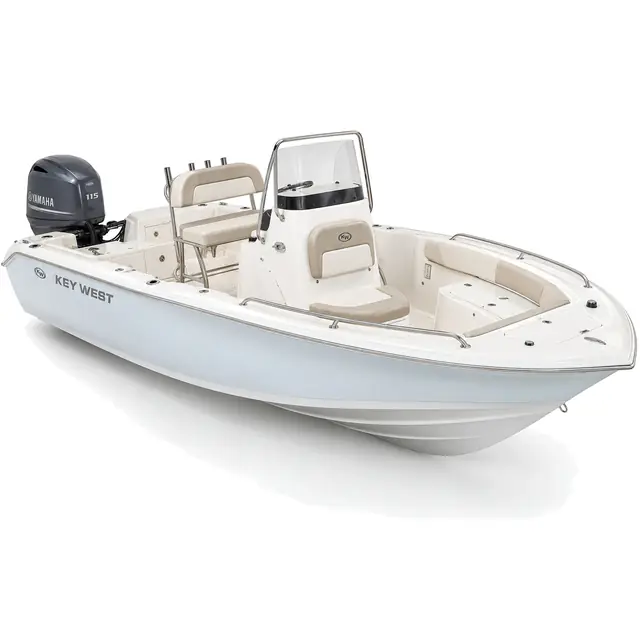
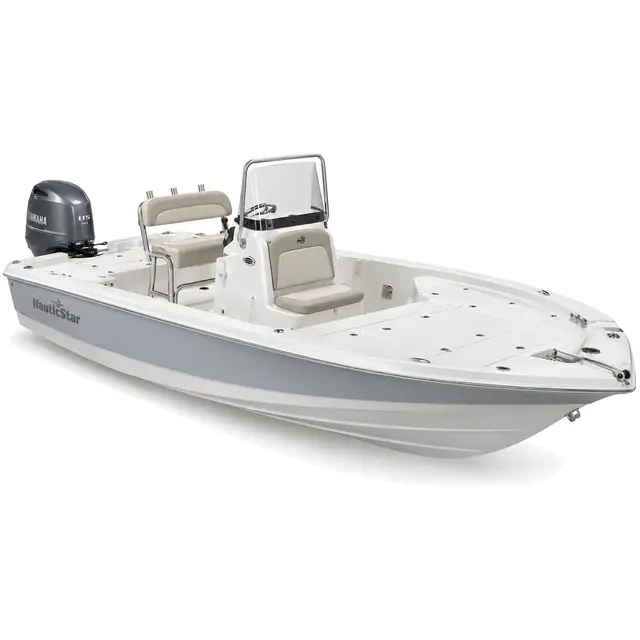
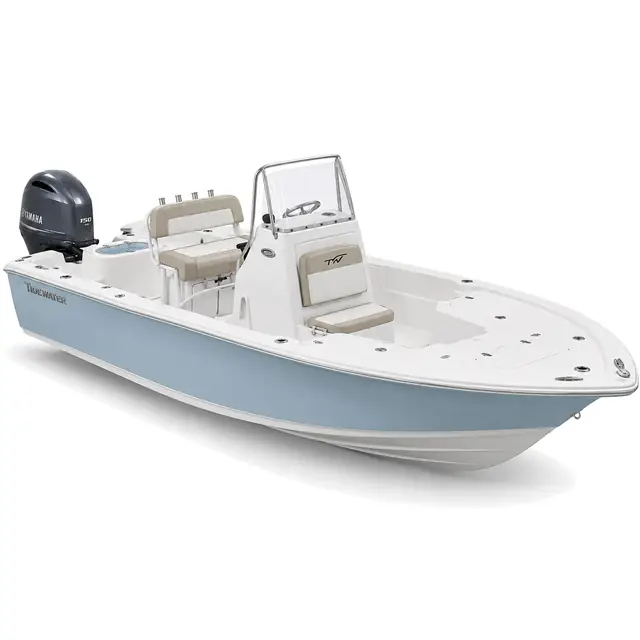
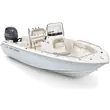
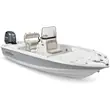
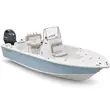
The bay boats reviewed below: Key West 189 FS, NauticStar 194 Bay and Tidewater 1910 BM. Manufacturer product photography.
Best Bay Boats Under 20 Feet: Shallow Draft, Real Deadrise, and What Length Costs You
Search for a shallow running bay boat and the best writing on the subject covers boats at 22 feet 11 inches, 23 feet 11 inches, 24 feet 6 inches, 24 feet 10 inches and 24 feet 11 inches. Every one of…
By Larry MurrayUpdated 6 September 202625 min readBuyer’s Guide
The quick answer
Under 20 feet, weight becomes the third variable in the draft and deadrise trade. A lighter hull genuinely buys more deadrise at the same draft, and it pays for that advantage in ride quality when the bay gets up, because a light boat is thrown around by chop that a heavier hull pushes through.
[DIRECT ANSWER] A bay boat under 20 feet trades some ride quality in short chop for genuinely shallow draft and, on the lighter hulls, more deadrise than you’d expect at that draft. The strongest all rounder right now is the Key West 189 FS, pairing a 12 inch published draft with 19 degrees of transom deadrise on a hull light enough to float that shallow. If floating shallow is the only priority, the NauticStar 194 Bay’s 11 inch draft is the number to beat. For freeboard and fuel range on a rougher run home, the Tidewater 1910 BM’s 56 gallon tank and 15 degree deadrise on a heavier hull make it the steadier boat in a building sea.
Every model here is a dealer purchase. If you want a specific boat’s current pricing and availability, use the dealer enquiry links in each product section below rather than a third party listing site, which is frequently out of date on this class.
Affiliate disclosure. This is a buyer’s guide to dealer purchased boats, not an affiliate product roundup. ReefReadyGear does not sell boats and does not earn a commission on the models below. We built this guide to help you shortlist the right hull before you walk into a dealership, and we link out to the rigging, electronics and safety gear that actually carry an affiliate relationship once you own one. Specifications verified against builder sources in September 2026, with gaps noted where a builder hasn’t published a figure.
Weight is the third variable
Two boats can share a draft figure and ride completely differently because one is 700 lb heavier. This page reads draft, deadrise and dry weight together, and states draft at a defined load rather than repeating a brochure figure taken with empty tanks.
ReefReadyGear does not run a testing programme, and nothing on this page is presented as a first-hand test result.
Every figure here is drawn from manufacturer and builder documentation, authorised retailer listings and published
angler experience, verified in September 2026 and dated where it matters. Where a number is our calculation rather
than a published figure, we label it and show the method.
Draft, deadrise, dry weight and fuel capacity read together rather than one at a time
Draft stated at a defined load, following the convention this cluster uses throughout
The fuel tank swing quantified, since a full tank changes the number a dealer quotes you
The 19 to 20 foot overlap with the center console class stated openly, with both buyer framings linked
Where two authoritative sources disagree, both are quoted and attributed rather than blended, and where a maker
publishes no figure at all we say so instead of estimating quietly.
Search for a shallow running bay boat and the best writing on the subject covers boats at 22 feet 11 inches, 23 feet 11 inches, 24 feet 6 inches, 24 feet 10 inches and 24 feet 11 inches. Every one of them is over 20 feet. If you typed “under 20 feet” into that search bar because your garage is 20 feet deep, your truck is a half ton, or your budget tops out well south of a 24 footer, that coverage was never written for you.
Here’s what the under 20 foot class actually gets you, and it’s better than its reputation suggests on one measure and worse on another. A lighter hull can carry more deadrise at the same draft than a heavier one, because draft is a function of weight as much as it is length or shape. The Key West 189 FS, at 18 feet 9 inches and 1,650 pounds dry, carries 19 degrees of deadrise at 12 inches of draft. Boats nearly a third longer and considerably heavier don’t always beat that number. That’s the case for buying small. The honest case against it is length: a shorter hull pitches more in short period chop no matter how sharp its bottom is, because it bridges fewer wave crests.
This guide holds both facts at once, adds loaded draft estimates you won’t find on a builder’s spec page, and treats your garage and your tow vehicle as buying criteria rather than afterthoughts.
Why a lighter hull buys you more V
[DIRECT ANSWER] Yes, a lighter hull floats shallower, and it can also carry a sharper bottom at the same draft as a heavier boat. Draft is displacement divided by waterline area, so weight and hull shape trade against each other directly. A boat that weighs less needs less waterline area submerged to support that weight, so it either sits higher at a given bottom shape, or it affords a deeper, sharper V while floating at the same draft as a flatter, heavier boat.
The physics behind that belongs to a companion article rather than this one. For the full derivation of why draft and deadrise pull against each other on any hull, our guide to fishing skiffs and their draft and deadrise trade-off works through the mechanism in depth. Here, the short version is enough for the comparison that matters.
Sport Fishing Magazine’s coverage of shallow running bay boats, the best editorial on this subject and the reason this article exists as a size filtered alternative to it, put five boats through builder interviews and published specifications. All five are over 20 feet:
Boat (over 20 ft, for reference)
LOA
Draft
Transom deadrise
HydraSports Custom 23 Bay Bolt
22’11”
11.5″
14°
Pathfinder 2400 TRS
23’11”
not published
15°
Robalo R246 Cayman
24’6″
12″
16°
Yellowfin 24 Carbon Elite
24’10”
12″
15°
Sea Born FX25
24’11”
11″
17°
That’s a 14 to 17 degree deadrise band at 11 to 12 inches of draft, on boats that weigh considerably more than anything in this article, on average somewhere north of 3,000 pounds rigged. The Key West 189 FS, at roughly half that displacement, matches or beats every one of those deadrise figures at the same 12 inch draft. That isn’t a small builder outperforming the big names. It’s weight doing what the physics predicts.
Data visual concept, not a stock photo: two hull cross sections at the identical waterline, one short and light with a pronounced V, one long and heavy with a shallower V. Caption: same draft, different deadrise, because one hull weighs less.
None of this makes the under 20 foot class a better version of the 22 to 25 foot class. It means the two classes buy their draft differently, and the under 20 foot buyer gets more V for the pound than “small boat, more compromise” gives it credit for. What that lighter weight costs you is next, and it’s real.
What length costs you
Within limits, yes, a bay boat under 20 feet can handle a rough run home, and the place it struggles isn’t hull shape. It’s length. A shorter hull bridges fewer wave crests at a time than a longer one, so it pitches more in short period bay chop even when its deadrise is genuinely good, because it doesn’t span as much of the wave pattern at once.
That’s a real limitation and the honest counterweight to the deadrise advantage above. A 19 foot boat with 19 degrees of deadrise still gets worked harder in a 2 to 3 foot wind chop than a 24 foot boat with less deadrise, purely because of wave encounter length. Deadrise softens the impact of each wave. Length determines how many waves you meet per minute, and buying deadrise doesn’t buy you out of that.
Two things matter more than the deadrise number for a rough run home, and neither shows up in the marketing copy the way deadrise does. Freeboard, the height of the hull sides above the waterline, is the difference between spray coming aboard and staying outside the boat. A genuinely self-bailing cockpit means the deck stays above the waterline and drains through scuppers rather than needing a bilge pump to keep up, at a realistic loaded weight rather than the dry weight on the spec sheet.
Expert tip: for the run home in a chop, ask about freeboard and whether the cockpit is genuinely self-bailing at a loaded weight, not an empty one. Those two answers tell you more about the trip than the deadrise number will.
Trim tabs help here too, correcting bow rise on plane and managing ride angle as conditions change. Treat them as a standard feature to look for, not an option to skip on a boat you’ll run in open water.
Draft, measured with fuel and gear aboard
[DIRECT ANSWER] Published drafts in this class commonly sit around 10 to 13 inches, with the Key West 189 FS at 12 inches and the NauticStar 194 Bay at 11 inches. Those are empty hull figures. Add fuel, batteries, a bow mount trolling motor, a shallow water anchor, gear and anglers, and the boat floats measurably deeper. Plan around a loaded figure, not the published one.
Most builders publish draft as a dry hull measurement with no stated load. HydraSports is a rare exception: the same Sport Fishing Magazine feature referenced above has HydraSports state its draft with a defined load already aboard, one person, fishing gear, five batteries, 50 gallons of fuel, a shallow water anchor and a bow mount trolling motor, engine trimmed up. That’s a comparable number, because it describes a boat rigged the way an owner actually fishes it, not the way it sits on the showroom floor.
We adopt that same convention here, following the standard our companion article on micro skiffs proposes for boats this size. A hull’s sides flare outward as it settles, so waterplane area grows as load goes on and draft doesn’t increase in exact proportion to the weight added. Our method applies a damping factor for that flare and rounds to the nearest quarter inch. These are our estimates, not builder measurements, and we label them as such throughout.
Boat
Dry weight
Published draft
Our loaded estimate
Load assumption
Key West 189 FS
1,650 lb
12″
approximately 15″
1 angler, gear, 5 batteries, 35 gal fuel (full tank), shallow water anchor, bow trolling motor, engine trimmed up
NauticStar 194 Bay
not published by builder
11″
not calculated, dry weight unconfirmed
Contact a dealer for the bare hull weight before comparing loaded draft against other boats
Tidewater 1910 BM
1,850 lb (hull, no engine)
not published by builder
approximately 14.5″, using our estimated 12″ dry draft for this deadrise and beam
Same defined load, applied to an estimated starting draft pending builder confirmation
The Key West line is the one to trust fully, because every input is a published figure. The other two rows show why this matters: a spec sheet with a draft number and no weight, or a weight and no draft, can’t be turned into a reliable loaded estimate. Ask your dealer directly for both figures before comparing boats across brands.
The fuel tank draft swing
[DIRECT ANSWER] More than most owners expect on a boat this size. Gasoline weighs approximately 6.1 pounds per gallon, so a 35 gallon tank holds over 200 pounds of fuel, more than 12 percent of a 1,650 pound hull’s dry weight. The boat visibly floats deeper at the start of a fishing day than at the end of one.
The Key West 189 FS carries 35 gallons, 213.5 pounds of fuel at full, 12.9 percent of its 1,650 pound dry weight. The Tidewater 1910 BM’s larger 56 gallon tank is 341.6 pounds full, 18.5 percent of its 1,850 pound hull weight before the engine is even counted. The boat with the bigger tank has the bigger proportional swing, worth remembering when a larger fuel capacity gets marketed as a pure advantage. It is one, for range. It’s also a bigger variable in your draft.
Plan a shallow run across skinny water around the lighter, shallower floating boat you’ll have at the end of the day, not the one you launched with at full tanks.
Three inches is the difference between the brochure and the boat you actually launch.
Every bay boat under 20 feet, plotted
Data visual concept, not a stock photo: a scatter plot with dry weight on the horizontal axis and transom deadrise on the vertical axis, each boat’s loaded draft shown as marker size. Plot the under 20 foot boats as one color and overlay the 22 to 25 foot reference cluster as a second color to the upper right. The point: the under 20 foot cluster sits to the lower left on weight and does not trail the larger cluster on deadrise the way its price and size suggest it should.
Boat
LOA
Dry weight
Transom deadrise
Published draft
Key West 189 FS
18’9″
1,650 lb
19°
12″
NauticStar 194 Bay
18’8″
not published
13.1°
11″
Tidewater 1910 BM
19’2″
1,850 lb (hull)
15°
not published
Reference: HydraSports Custom 23 Bay Bolt (22’11”, over 20 ft)
22’11”
not published
14°
11.5″ (loaded, HydraSports’ own convention)
Reference: Sea Born FX25 (24’11”, over 20 ft)
24’11”
not published
17°
11″
The Key West 189 FS, at roughly half the likely displacement of the reference boats, carries more deadrise than four of the five in the over 20 foot cluster at a comparable published draft. The NauticStar 194 Bay carries less deadrise at 13.1 degrees, closer to the flatter end of the range, which helps explain its shallower published draft. Deadrise and draft still trade against each other inside the under 20 foot class itself, the same way they trade between size classes. A flatter bottom buys shallower water. A sharper one buys a softer ride at the cost of a little draft. Weight is what lets the Key West do relatively well on both.
The Key West carries more deadrise than boats five feet longer, at the same draft. That is the weight advantage, plotted.
The best bay boats under 20 feet
Category boundary, stated plainly: to qualify for this list, a boat must be under 20 feet 0 inches length overall, built as a center console or bay style layout with a self-bailing cockpit and casting room fore and aft, and carry at least 10 degrees of transom deadrise. That deadrise floor is what separates a bay boat from a flat bottomed utility hull or a technical poling skiff, which belong in our flats skiff guide and micro skiff guide instead. A boat at 19 feet 11 inches belongs here. A boat at 20 feet 1 inch belongs in our 19 to 22 foot center console guide, unless its intended use points the other way, which is a genuine gray area explained further down this page.
Key West 189 FS — Best overall under 20 feet
Published specifications
LOA
18’9″
Beam
8’0″
Published draft
12″
Our loaded draft estimate
approximately 15″
Transom deadrise
19°
Dry weight
1,650 lb
Maximum horsepower
150 hp
Fuel capacity
35 gal
Person capacity
7
Price
contact a Key West dealer for current base and rigged pricing
Best for: the buyer who wants the most deadrise this class offers without giving up the shallow draft that got them shopping under 20 feet.
Key features. The 189 FS carries more transom deadrise than any other boat in this comparison, on the lightest dry weight, exactly the relationship this article is built around. At 8 feet of beam it’s not the roomiest deck here, but the layout is efficient, with a forward casting platform and a rear cockpit that both stay usable at typical fishing loads. Worth being direct about: Key West positions this model for family use and watersports alongside fishing, not as a dedicated tournament platform, which shows in some standard equipment choices. It doesn’t change the hull’s numbers, which are why it’s on this list.
Advantages
Highest deadrise to draft ratio in this comparison
Lightest dry weight in the class, keeping the loaded draft swing more manageable
150 hp ceiling is enough engine for real performance on a hull this light
Strong resale demand in the used market
Limitations
Marketed as a family and watersports boat as much as a fishing boat, which shows in some trim and storage choices
35 gallon fuel capacity is on the smaller side, limiting range compared to the Tidewater
Seven person capacity is a regulatory figure, not a fishing capacity, covered further down this page
Base rigging varies by dealer, so confirm what’s included before comparing price
Real world application. For a skinny water flat, an oyster bar edge, or a marsh drain, run by an owner who also wants the crossing back to the ramp without babying the throttle.
Who should buy it. Anglers whose fishing is mostly shallow grass flats and marsh, who want the best combination of shallow draft and a soft ride available under 20 feet.
Who should avoid it. Buyers who need the largest fuel tank in the class, or a dedicated tournament layout without the family boat design choices built into this model.
NauticStar 194 Bay — Shallowest published draft
Published specifications
LOA
18’8″
Beam
93″ (7’9″)
Published draft
11″
Transom deadrise
13.1°
Deadrise at entry
40.5°
Dry weight
not published by builder without engine and top; confirm with a dealer
Maximum horsepower
150 hp
Fuel capacity
37 gal
Livewell capacity
13 gal in console, 27 gal rear
Person capacity
5
Price
MSRP $47,952, commonly offered around $40,479
Best for: the buyer whose single priority is the shallowest published draft available under 20 feet, and who is comfortable with a flatter, less cushioned ride in exchange for it.
Key features. At 11 inches, this is the shallowest published draft here. That comes with an expected trade: 13.1 degrees of transom deadrise is meaningfully flatter than the Key West’s 19 degrees, which is a large part of how the NauticStar gets that inch shallower in the first place. The dual livewell setup, 13 gallons in the console and 27 gallons rear, is generous for this size class. A 37 gallon fuel tank gives it slightly more range than the Key West.
Advantages
Shallowest published draft in this comparison
Strong livewell capacity across two separate tanks
5 person capacity is a more honest reflection of realistic fishing use than boats rated higher
Published pricing available directly from the builder
Limitations
Flattest bottom in this comparison, which will ride harder in chop than the Key West or Tidewater
Builder does not publish a bare dry weight, so an independent loaded draft estimate isn’t possible until a dealer confirms it
Lowest person capacity of the three boats reviewed here
Real world application. Best in the shallowest water in this comparison, fished mostly in protected bays and grass flats, where the shallower draft pays off directly and the flatter bottom’s rougher ride matters less.
Who should buy it. Anglers for whom an extra inch of draft is the deciding factor, who fish protected water more than they cross open bays, and who want the most livewell capacity in this class.
Who should avoid it. Anyone who regularly crosses open, wind exposed water, where the flatter bottom is the boat’s most noticeable limitation.
Tidewater 1910 BM — Best for the rougher run home
Published specifications
LOA
19’2″
Beam
8’4″
Published draft
not published by builder; confirm with a dealer
Transom deadrise
15°
Dry weight
1,850 lb (hull, without engine)
Maximum horsepower
150 hp
Fuel capacity
56 gal
Person capacity
7 (1,050 lb)
Price
not published; contact a Tidewater dealer
Best for: the buyer whose priority tilts toward the rougher run home rather than the shallowest possible water, and who wants real fuel range in a boat still under 20 feet.
Key features. At 19 feet 2 inches this is the longest hull in this comparison while staying under the boundary, and length is exactly the variable that helps in chop. Its 15 degrees of deadrise sits between the Key West and the NauticStar, and its 56 gallon fuel tank is by far the largest here, giving it meaningfully more range. The 8 foot 4 inch beam is the widest of the three, adding stability and deck space.
Advantages
Longest hull under the 20 foot boundary, softening pitch in short chop relative to the other two
Largest fuel capacity in this comparison by a wide margin
Widest beam here, adding deck space and stability at rest
Highest rated person and gear capacity in this comparison, at 1,050 lb
Limitations
Builder does not publish draft, unusual for a boat marketed on shallow water capability, and worth asking about directly
At 1,850 lb dry for the hull alone, before an engine, this is the heaviest boat here, working against the shallow draft this class is chosen for
Pricing isn’t published online
56 gallon fuel tank represents the largest single variable weight swing of the three, as shown in the fuel swing section above
Real world application. For an owner who splits time between shallow flats and longer, more open runs, valuing the steadier ride and extended range over the last inch of draft.
Who should buy it. Anglers who cross open water regularly, who want maximum fuel range in this class, and who’ll ask their dealer directly for the draft figure the builder doesn’t publish.
Who should avoid it. Buyers whose entire priority is the shallowest possible draft, where the added weight works against the goal.
Other builders worth cross shopping
Several well known bay boat builders currently have nothing under 20 feet. Sportsman Boats’ Masters series starts at 20 feet 7 inches, and Pathfinder’s smallest current bay model runs well over 20 feet. If a builder you’ve heard of isn’t listed above, check their current lineup before assuming they have an entry in this class, because several don’t.
Sea Born, Blue Wave, Sea Pro and Carolina Skiff all build boats near this size range and are worth a dealer visit, but their exact current specifications for a sub 20 foot model weren’t independently confirmed for this article. Verify directly with a dealer before comparing them against the three boats reviewed above.
How many can really fish?
[DIRECT ANSWER] Two comfortably, three at a push. Capacity plates state a much higher number. The Key West 189 FS and the Tidewater 1910 BM are both rated for seven persons. Those are regulatory and seating figures, not a statement of how many anglers can cast at once from an 18 to 19 foot deck without hooking each other.
A capacity plate is calculated under federal rules built around static seating and buoyancy, not fishing. It answers “how many people and how much weight can this hull safely support while underway.” It does not answer “how many can hold a rod and a casting stroke at once without three lines crossing,” which is the question that determines a good day on the water.
Two anglers casting from bow and stern is workable most of the time. Add a fourth adult and someone is standing where the leaning post, the console, or another angler’s backcast wants to be. That’s the physical reality of an 18 to 19 foot deck plan, worth knowing before you plan a trip around the capacity plate number rather than the number your deck actually supports.
Data visual concept, not a stock photo: a top down deck plan diagram of a representative 19 foot bay boat, with two figures shown fishing comfortably from the bow and stern casting positions, and a third figure shown in a workable but tighter position near the console, illustrating where a third angler realistically stands and what space is left for tackle and movement.
Will it fit your garage and your truck?
[TABLE] This is frequently the constraint that produced the “under 20 feet” search in the first place, and no boat review treats it as a buying criterion the way it deserves to be. Trailer length, not boat length, is the number that decides the garage question, and a T-top frequently decides it outright once height is added to the equation.
Boat
Boat LOA
Trailer length (est.)
Height with T-top (est.)
Dry tow weight (est.)
Loaded tow weight (est.)
Key West 189 FS
18’9″
22’6″ to 23’0″
8’0″ to 8’6″
3,200 to 3,600 lb
3,500 to 3,900 lb
NauticStar 194 Bay
18’8″
22’0″ to 22’6″
8’0″ to 8’6″
3,300 to 3,700 lb
3,600 to 4,000 lb
Tidewater 1910 BM
19’2″
23’0″ to 23’6″
8’0″ to 8’6″
3,700 to 4,100 lb
4,200 to 4,600 lb
These are estimated ranges, not published trailer specifications, built from typical trailer allowances for boats of this length, beam and dry weight. Confirm the exact trailer package your dealer quotes before measuring your garage or checking your tow rating. Every builder here offers more than one trailer option, and the engine, T-top and rigging package will move these numbers.
Three practical rules. Trailer length runs roughly 3 to 4 feet longer than the boat itself, for the tongue and winch stand, so an 18 foot 9 inch boat needs closer to 22 to 23 feet of garage depth, not 19. A T-top typically puts trailered height in the 8 to 8 foot 6 inch range, which clears most standard 7 foot garage door openings but is worth measuring exactly, including the trailer’s own ground clearance. And a half ton pickup with a properly rated tow package generally handles the dry tow weight of every boat here with room to spare, but the loaded tow weight, with a full tank and gear aboard, is the number to check against your truck’s rated capacity, not the lighter dry figure a dealer may quote first.
Data visual concept, not a stock photo: a side view graphic showing a boat and trailer silhouette with a T-top, overlaid against a standard 7 foot garage door opening and a standard two car garage depth, with the trailer length and height dimensions called out directly on the image.
New under 20, or used over 20?
At a given budget, a genuine choice sits in front of a lot of buyers: a new 19 footer with a full warranty, or a used 22 to 24 footer a few years old for similar money. No dealer content walks through this honestly, because it isn’t in any single dealer’s interest to recommend the other option.
A new 19 footer gives you a full manufacturer warranty on hull and typically engine, current safety equipment, a boat nobody else has run hard, and the shallow draft and deadrise relationship explained above. It costs more per foot and gives up the length advantage in chop that a bigger hull carries.
A used 22 to 24 footer buys more length, generally more deadrise in absolute terms, more deck space and often a softer ride, frequently for comparable money once you account for typical depreciation. It comes with an unknown maintenance history, an expired or nonexistent warranty, and a real risk that a boat priced to move has a reason behind that price.
What a used survey should cover: transom core condition, checked with a moisture meter rather than by eye; engine hours against the boat’s age, since low hours on an old engine can indicate storage problems as easily as light use; stringer and deck core condition; steering and hydraulic function under load; and a compression test rather than a smooth idle alone. The American Boat and Yacht Council’s construction standards are the reference point a qualified surveyor works against, and a pre purchase survey is worth the cost at this price point.
The honest version: a buyer who fishes mostly shallow water, wants a warranty, and doesn’t cross open bays often is usually better served by the new smaller boat. A buyer with the mechanical knowledge or surveyor budget to buy used, who wants more length for rougher home water, can genuinely do better on capability per dollar with a used larger boat. Neither is the smarter choice in the abstract. They’re right for different buyers.
The 19 to 20 foot overlap, and which guide is actually written for you
Worth stating plainly: a boat at 19 feet 6 inches can legitimately appear both in this guide and in our 19 to 22 foot center console guide, and that isn’t a mistake in either article. It’s a real overlap in the market, and the two guides resolve it on intended use rather than the tape measure.
This guide is written for the buyer whose priority is shallow water, with a rougher run home as the secondary concern: mostly grass flats, oyster bars, marsh drains and protected bays, where the roughest water you’ll cross is a bay that’s kicked up on the way back to the ramp. The 19 to 22 foot guide is written for the buyer who intends to run offshore, even occasionally, where range, sea state capability and a different equipment list matter more than the last inch of draft.
Read both if you’re genuinely unsure which buyer you are. The physical boat at 19 feet 6 inches might be identical either way. The rigging and the honest expectations about what it can do for you are not, and that’s the distinction that matters.
Two comfortably, three at a push. Capacity plates state a much higher number: the Key West 189 FS is rated for seven persons. That is a regulatory and seating figure, not a statement of how many can cast at once from an 18 foot 9 inch deck without hooking each other.
A bay boat generally carries more deadrise, more freeboard and more fuel capacity than a flats skiff built for the same length, trading some of the skiff’s ultra shallow draft for a boat that handles a wider range of conditions. See our flats skiff guide for the draft and deadrise mechanics both boat types share.
Not always. A jack plate lets you raise the engine higher than the transom mount allows, which reduces draft further at rest and improves shallow water performance, at the cost of added weight and complexity. It’s a worthwhile addition for an owner who regularly pushes into skinnier water than the hull’s stock draft comfortably handles, and unnecessary for an owner who mostly fishes water the boat already clears.
Base boat, motor and trailer packages in this class commonly run from the high $30,000s to the low $60,000s depending on builder, engine choice and rigging level, with electronics, a trolling motor and additional safety gear adding several thousand more. Confirm current pricing directly with a dealer, since base prices in this category have moved meaningfully year over year. —
Final verdict
A lighter hull genuinely buys more deadrise at the same draft, which is the physics this whole class runs on and the reason the under 20 foot segment deserves better coverage than it’s gotten. That advantage comes with a real cost in ride quality, because a shorter hull pitches more in short chop regardless of how sharp its bottom is, and no amount of deadrise buys that back. For the buyer whose priority is skinny water with an occasional rough run home rather than a boat built around open water crossings, the Key West 189 FS currently delivers the best balance of those two facts under 20 feet, and it’s worth a sea trial before anything else on this list.
Larry Murray
Editor, ReefReadyGear
Larry edits ReefReadyGear, a research-led saltwater gear publication. Recommendations here are built from manufacturer specifications, authorised retailer listings and published angler experience, and we say so plainly rather than implying a testing programme we do not run. Where a claim comes from a manufacturer, we attribute it. Where we have not verified something, we do not print it.
Specifications on this page were taken from manufacturer and authorised retailer listings and the regulatory and safety sources below, consulted September 2026. Prices and specifications change; confirm current figures before buying.
Key West 189 FS: fully verified in the brief (LOA, beam, draft, deadrise, dry weight, hp, fuel, person capacity). Price was not verified and the article correctly directs readers to a dealer rather than stating a figure.
NauticStar 194 Bay: verified via nauticstarboats.com/194-bay/ (LOA, beam, draft, deadrise at transom and entry, hp, fuel capacity, livewell capacities, person capacity, MSRP and online price). Dry weight was not present on the fetched page and is flagged in the article as unconfirmed. Get this figure from a dealer before the next revision and complete the loaded draft estimate for this boat.
Tidewater 1910 BM: verified via tidewaterboats.com model page (LOA, beam, deadrise, dry hull weight without engine, hp, fuel, person capacity). Draft and price were not present on the fetched page and are flagged as unconfirmed. This is the highest priority follow up before the next revision, since the loaded draft table and the fuel swing section both depend on it.
Sportsman Boats and Pathfinder: attempted verification found no current model under 20 feet for either builder as of this drafting session. This is stated in the article as a genuine finding. Re-check at each refresh, since lineups change.
Sea Born, Blue Wave, Sea Pro and Carolina Skiff: not independently verified this session (Sea Pro’s site redirected to a dealer group page with no model data; Blue Wave and Sea Born were not successfully reached with usable specification data in the time available). The article names them as worth cross shopping without stating fabricated specifications, consistent with house verification standards. Before the next major revision, verify whether any current model from these builders qualifies under the stated boundary (under 20’0″, center console or bay layout, self-bailing cockpit, 10+ degrees transom deadrise) and add full product blocks if so.
Sport Fishing Magazine reference cluster figures (HydraSports Custom 23 Bay Bolt, Pathfinder 2400 TRS, Robalo R246 Cayman, Yellowfin 24 Carbon Elite, Sea Born FX25): taken directly from the brief, which cites the published feature. Reverify against the original Sport Fishing Magazine piece before publication if it’s still accessible, and add a direct citation link.
HydraSports defined-load draft convention: taken from the brief, sourced to Sport Fishing Magazine. Same reverification note applies.
Fuel weight (6.1 lb/gal gasoline): standard published density figure, not builder specific.
33 CFR 183 person capacity context: general regulatory framework, cited by section number, not by quote. Verify current eCFR text before publication if a direct quote is added.
Join The ReefReady Community
Get saltwater Fishing Guides, expert Buyers Guides, equipment recommendations,
marine electronics insights, and practical gear tips delivered to your inbox.
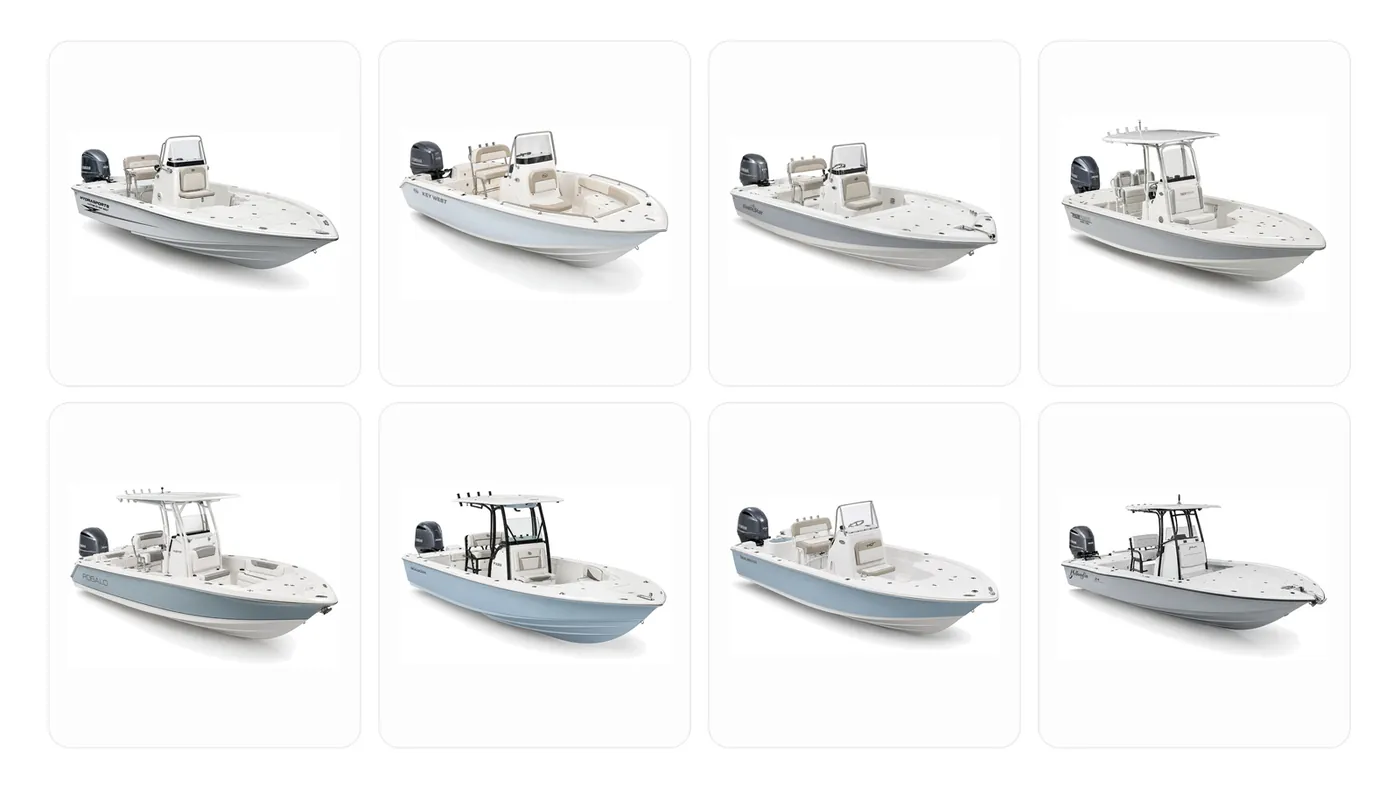
 Best overall under 20 feet
 Shallowest published draft
 Best for the rougher run home
 HydraSports Custom 23 Bay Bolt
 Pathfinder 2400 TRS
 Robalo R246 Cayman
 Yellowfin 24 Carbon Elite
 Sea Born FX25