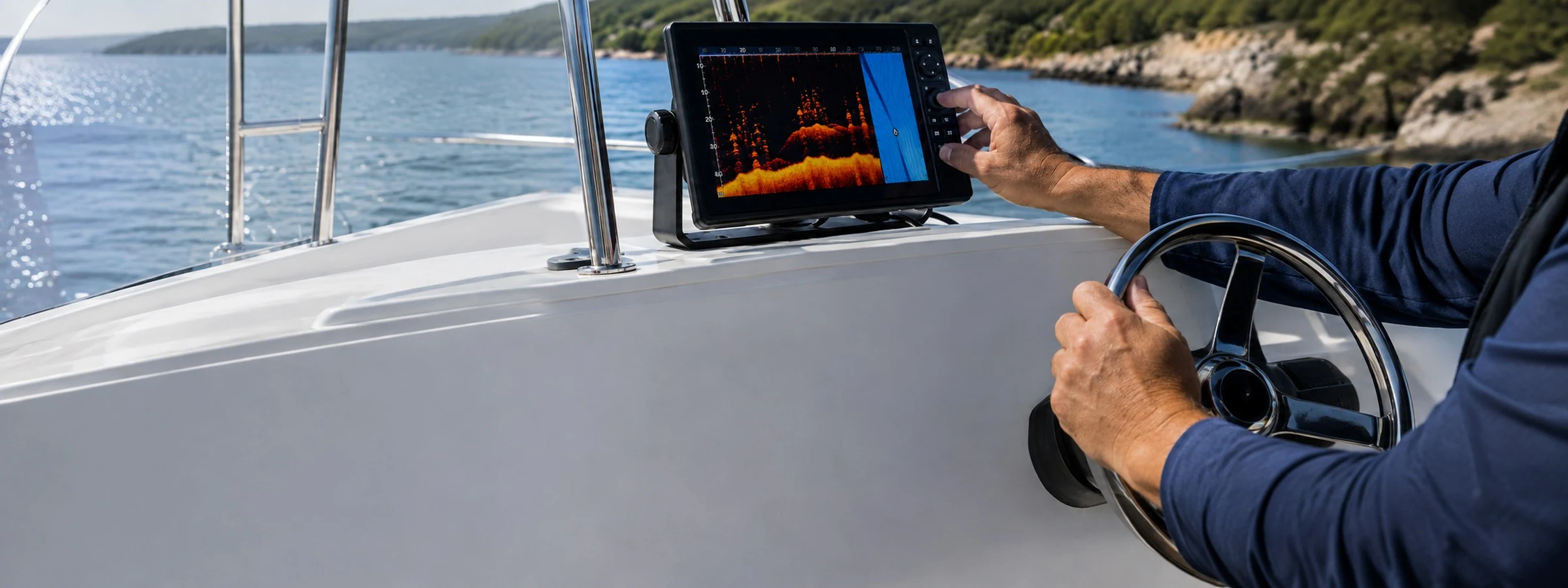
Marine electronics is the category where anglers most often buy the wrong thing for the right reason. The specification that matters is rarely the one on the box. We explain what CHIRP, side imaging and transducer choice actually change on the water, then match units to how and where you fish.
Four units at different tiers, plus the mount and power that make any of them work. Specifications below come from manufacturer and authorised retailer listings, not from our own testing.
Fish Finders & ElectronicsBest Overall Kayak & Small Boat UnitPremium
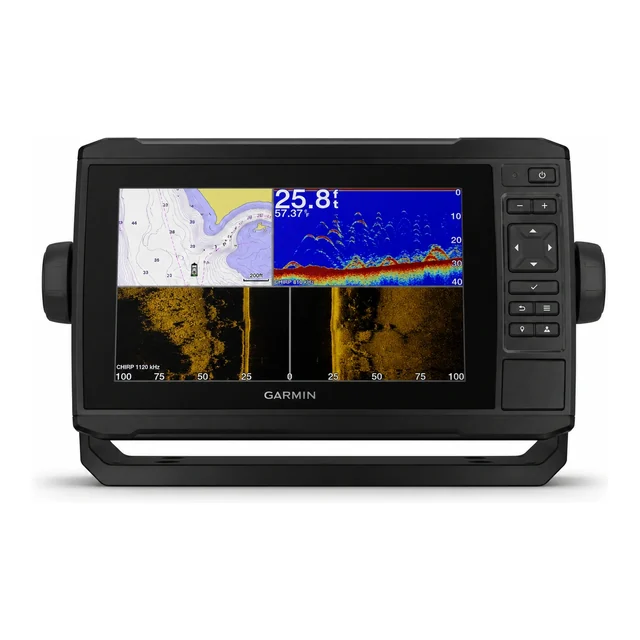
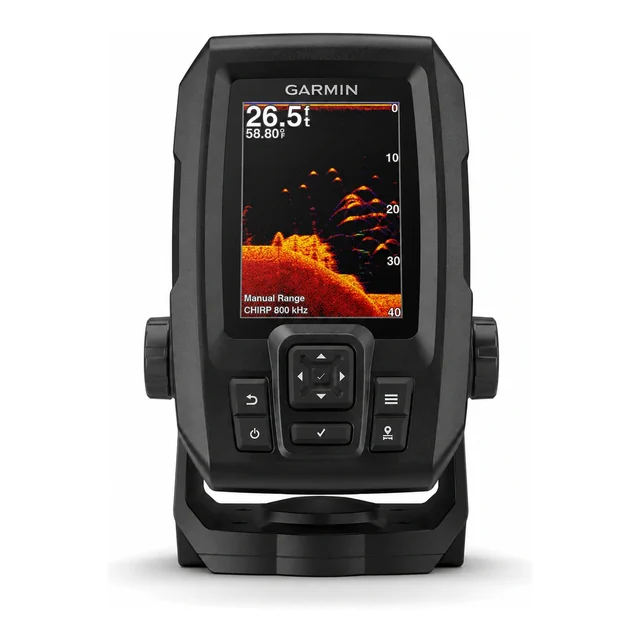
Garmin ECHOMAP UHD2 6sv
Advanced sonar and GPS navigation built for saltwater anglers who need a readable picture of what is under the hull and dependable positioning on the water.
Fish Finders & ElectronicsBest All-In-One TransducerMid-range
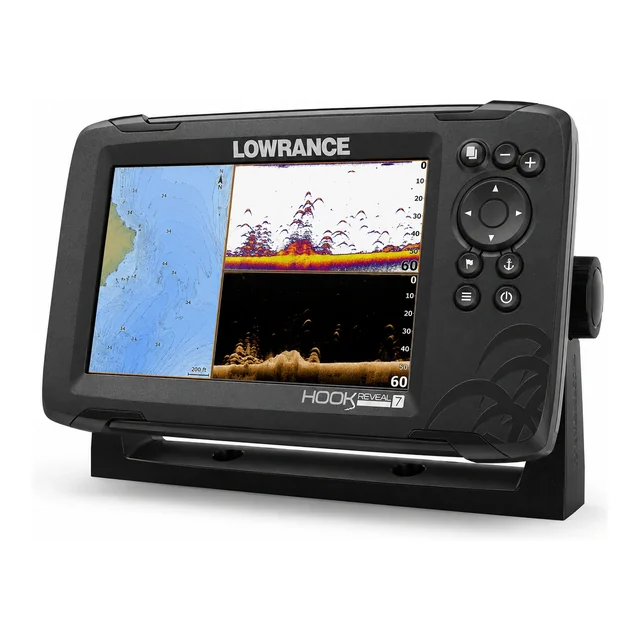
Lowrance HOOK Reveal 7 TripleShot
One transducer covers CHIRP, SideScan and DownScan, which keeps a small-boat or console install simple rather than stacking multiple pucks under the hull.
7″ display with TripleShot transducer
High CHIRP sonar plus SideScan and DownScan Imaging
FishReveal overlays sonar targets on DownScan
Autotuning sonar adjusts settings as conditions change
Fish Finders & ElectronicsBest Electronics MountAccessory
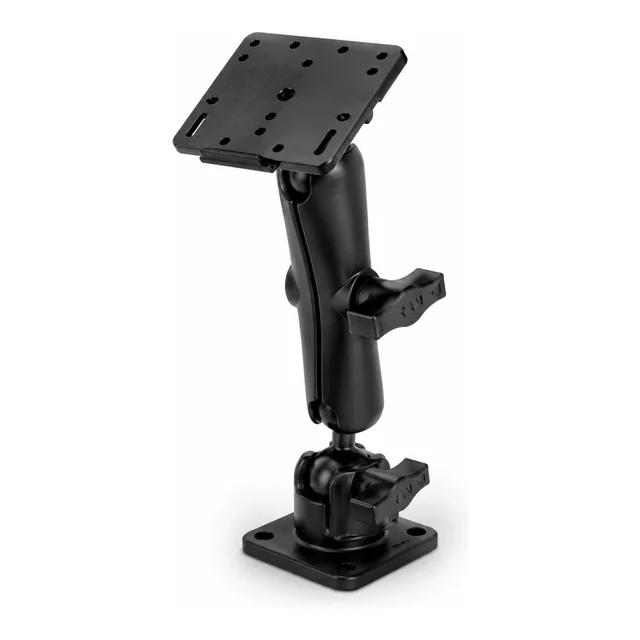
RAM Mounts Marine Electronics Mount
Gets the screen off the deck and into your eyeline. The right mount is the difference between reading sonar at a glance and craning your neck all morning.
Fish Finders & ElectronicsBest Power SolutionMid-range
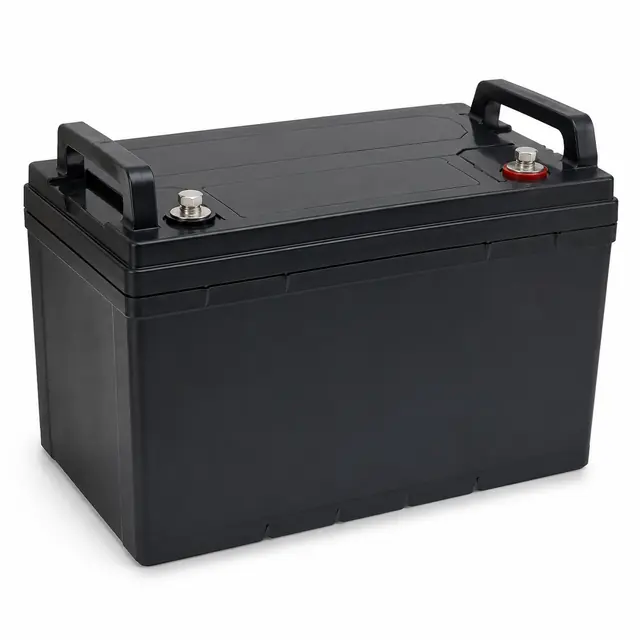
12V Lithium (LiFePO4) Marine Battery
A fish finder is only as reliable as what feeds it. Lithium chemistry saves meaningful weight over sealed lead-acid, which matters more on a kayak than anywhere else.
Match capacity (Ah) to your unit’s draw and your session length
Confirm the pack has a built-in battery management system
Use an in-line fuse on the positive lead
Store in a dry bag or sealed box, not loose in the hull
Affiliate disclosure. ReefReadyGear is a participant in the Amazon Services LLC Associates Program. As an Amazon Associate I earn from qualifying purchases. Links to products on this page are affiliate links, and they never change what you pay.
Guides & Comparisons
Technical education first, then the comparison that turns understanding into a decision.
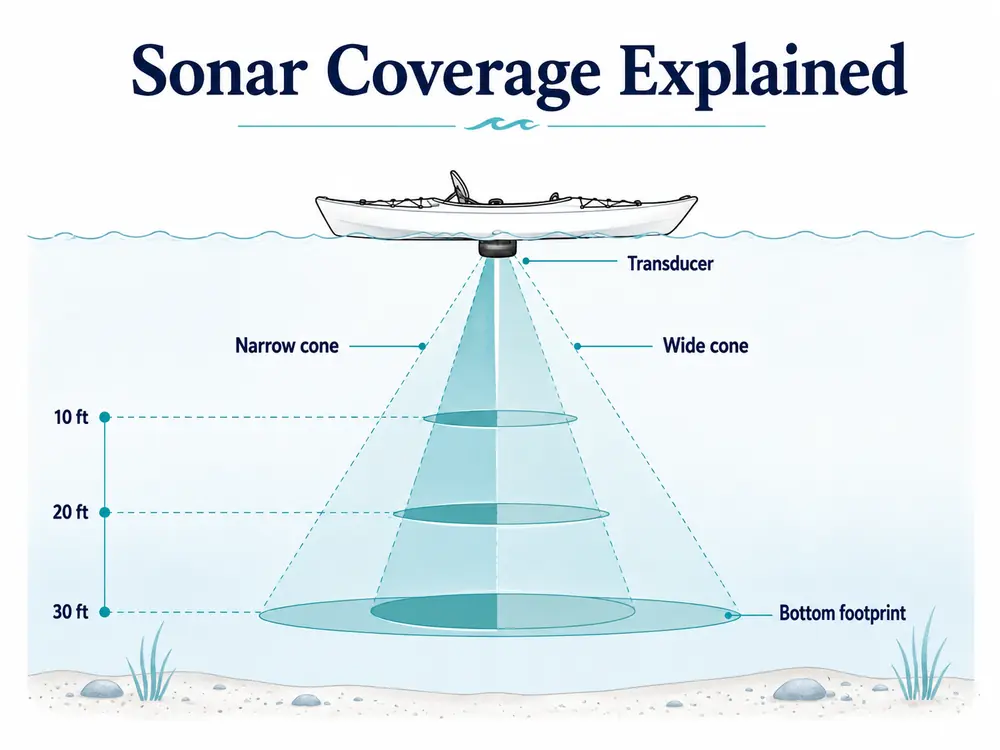
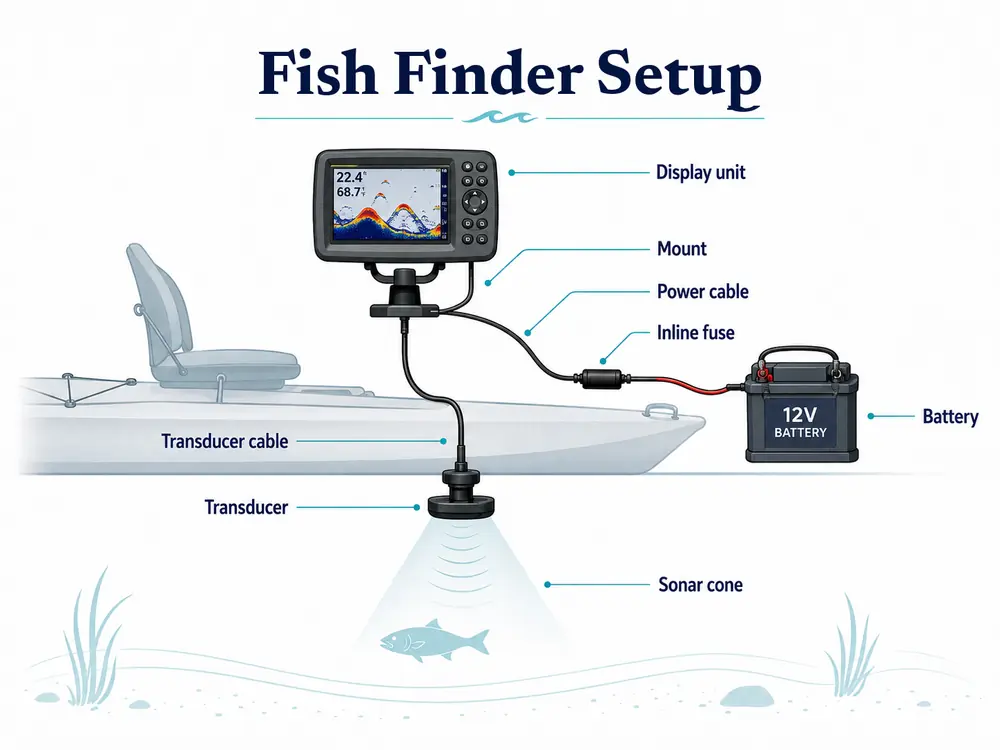
Two drawings that explain more about buying a fish finder than any spec sheet will: what the transducer can see, and what a complete install looks like.
Cone angle decides coverage, and coverage grows with depth. A wide cone sees more water; a narrow cone resolves it better.Every component in a working install. The inline fuse is the part most often skipped and the one that protects everything else.
Why This Category Matters
This is the highest-value equipment on the site and the most technically driven purchase. Readers arrive mid-decision, comparing two named models, and they convert when the technical difference is finally explained in terms of what they will see on screen.
Higher product values
Model-versus-model search demand
Feature education
Best-by-budget and best-by-use-case content
Strong upgrade intent
Accessory and install attachments
Pinterest angles for this category
Fish Finder Buying Guide For Beginners
CHIRP vs Side Imaging Explained
7 Things To Know Before Buying A Fish Finder
Complete Kayak Fish Finder Setup
Fish Finder Screen Size Comparison
Each angle is a separate Pin creative pointing at the
same in-depth article — different search intent, same honest landing page.
Join The ReefReady Community
Get saltwater Fishing Guides, expert Buyers Guides, equipment recommendations,
marine electronics insights, and practical gear tips delivered to your inbox.