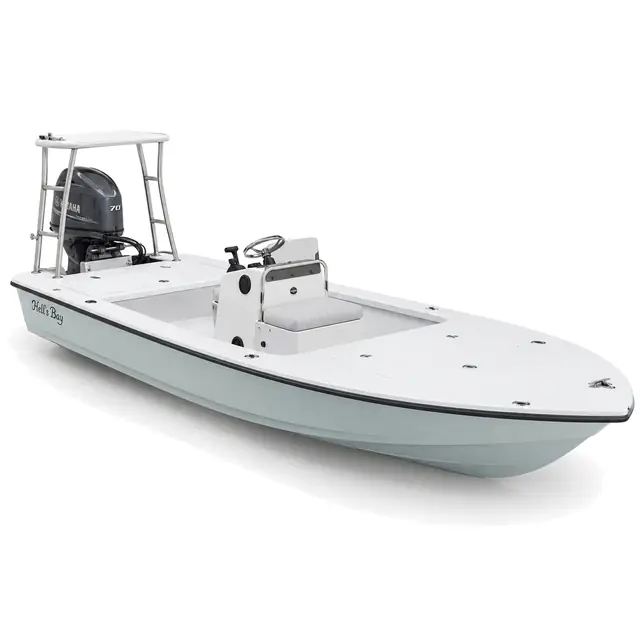
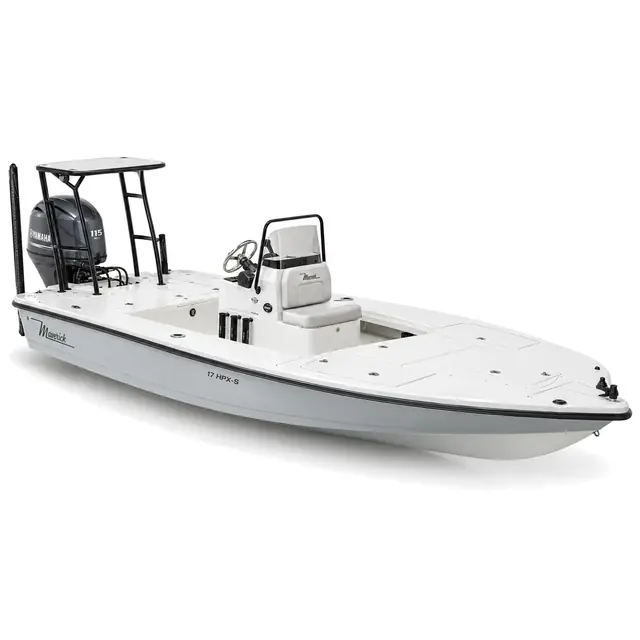
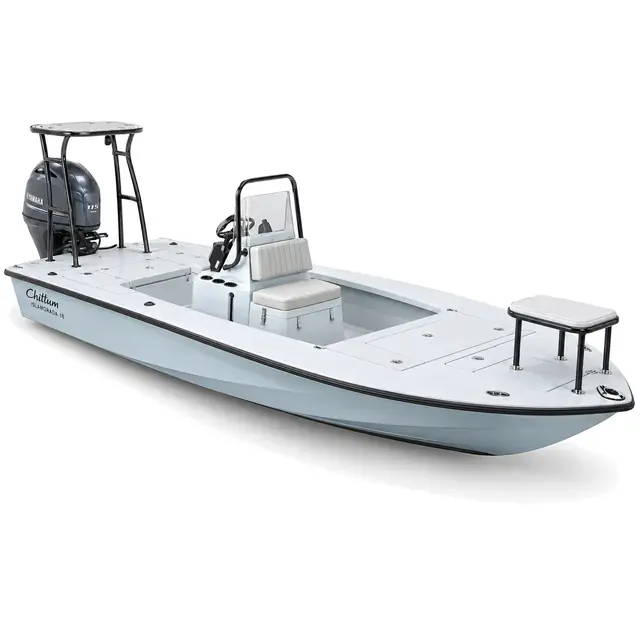
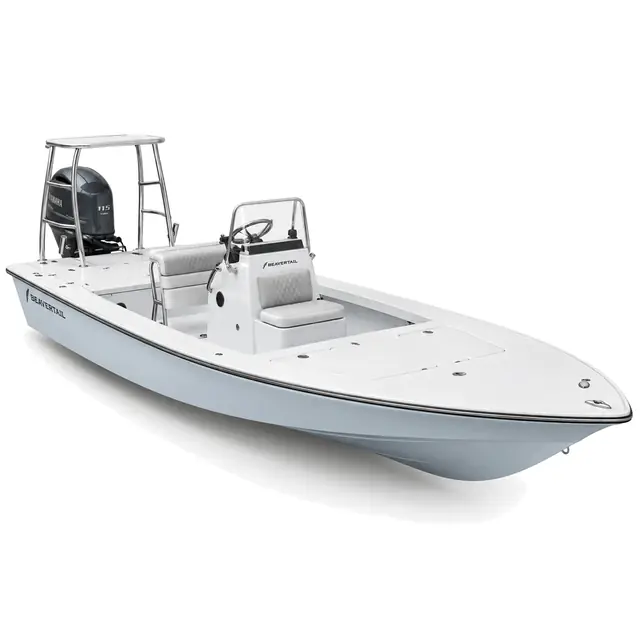
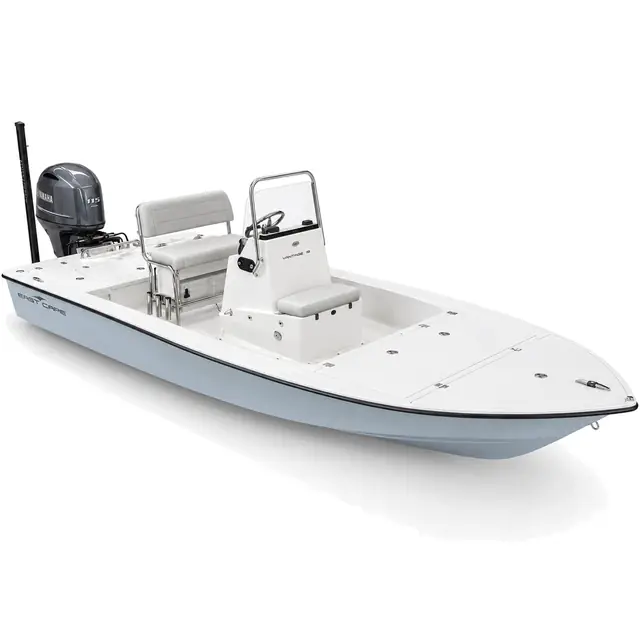
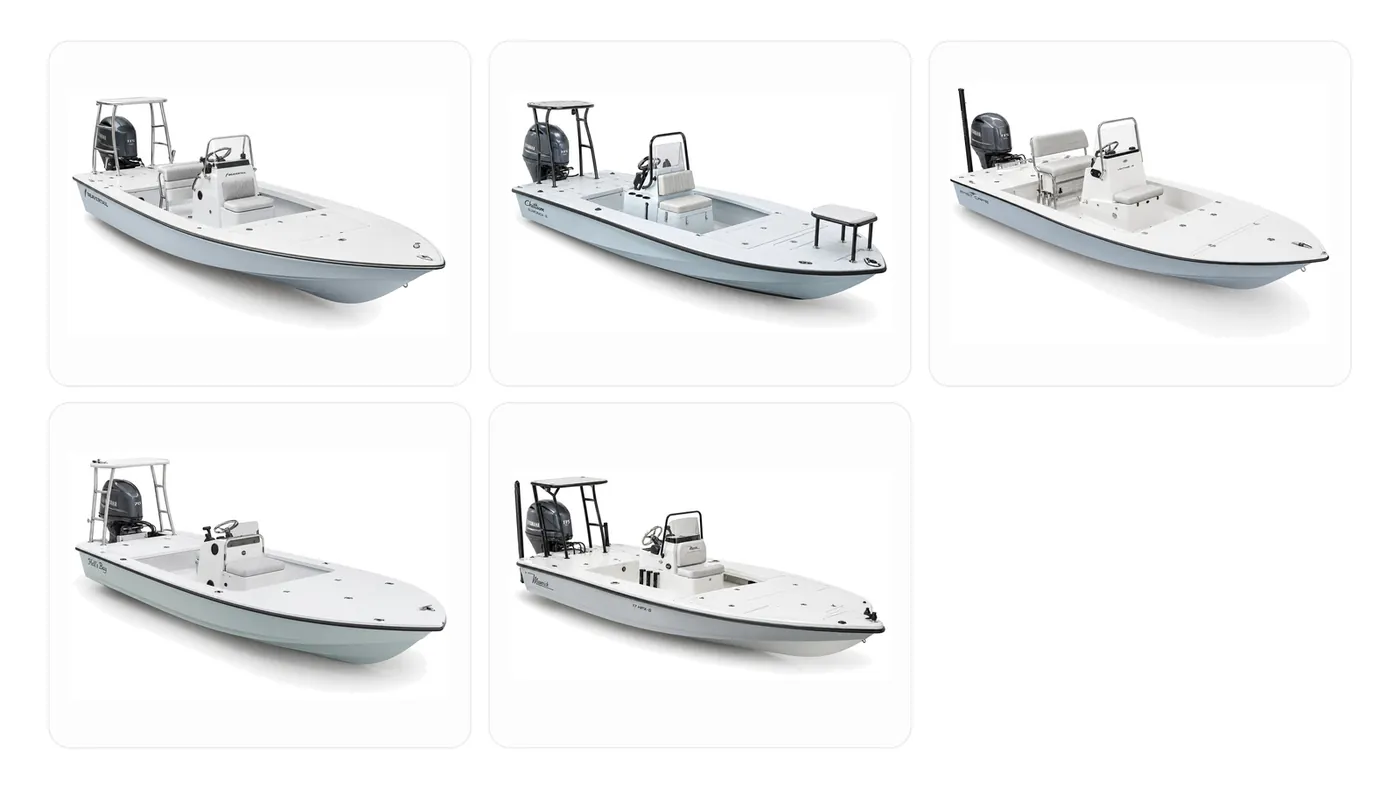
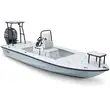
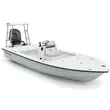
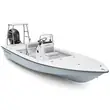
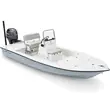
The skiffs reviewed below: Hell’s Bay Whipray, Maverick 17 HPX-S, Chittum Islamorada 18, Beavertail Strike 17 and East Cape Vantage 19. Manufacturer product photography.
Best Skiffs for Shallow Flats and Choppy Bays: The Draft and Deadrise Trade-Off
Eight inches of water on the flat at dawn. A tailing fish thirty feet off the bow, the pole barely moving, the hull drawing almost nothing. By eleven the tide has turned and so has the wind, and the…
By Larry MurrayUpdated 6 September 202627 min readBuyer’s Guide
The quick answer
Shallow draft and a soft ride come from opposite hull shapes. Flat sections float shallow and slam in chop; deadrise cuts chop and needs more water underneath. No skiff escapes that trade, whatever the marketing says.
[DIRECT ANSWER] A skiff cannot minimize draft and maximize ride quality at the same time, because the two properties come from opposite hull shapes. The right boat gives you the least draft your typical crossing will tolerate, not the least draft period.
Talk to a builder or dealer before you commit. The specification table further down gives you the vocabulary for that conversation.
Editorial note. This is a boat buying guide, not a product review. ReefReadyGear does not sell or ship these hulls, and no purchase happens on this page. Specifications below are drawn from builder pages and published expert coverage, verified September 2026, and every figure is dated to its source. Where a builder has not published a number, we say so rather than guess.
The trade you cannot design around
Draft, deadrise and weight are three points on one triangle, and a builder can improve any two by giving up the third. This page treats that as physics rather than as a marketing dispute, and every hull is placed on the same plot.
ReefReadyGear does not run a testing programme, and nothing on this page is presented as a first-hand test result.
Every figure here is drawn from manufacturer and builder documentation, authorised retailer listings and published
angler experience, verified in September 2026 and dated where it matters. Where a number is our calculation rather
than a published figure, we label it and show the method.
Draft and deadrise read from builder pages and dated, with unpublished figures named rather than inferred
Every hull placed on one draft-against-deadrise plot so the trade is visible rather than argued
Crossing conditions defined before hulls were ranked, since the right answer changes with the water
Builders whose published figures could not be verified this cycle listed in the exclusions
Where two authoritative sources disagree, both are quoted and attributed rather than blended, and where a maker
publishes no figure at all we say so instead of estimating quietly.
Eight inches of water on the flat at dawn. A tailing fish thirty feet off the bow, the pole barely moving, the hull drawing almost nothing. By eleven the tide has turned and so has the wind, and the two miles of open bay between that flat and the ramp has a foot and a half of wind chop stacked on a two second period. The boat that felt perfect at dawn now has to get you home.
Every builder in this category will tell you their hull does both jobs. Ask a naval architect and you get a different answer. Draft comes from a flat bottom. A soft ride comes from a deep V. Those are opposite shapes, and no marketing copy changes the geometry. One builder, asked about hulls that draw almost nothing, told Sport Fishing Magazine that anything under about seven degrees of deadrise “would have to be built from expensive fabrics” and would still be “a very rough-running, lightweight boat with a hefty price tag.” That is the whole trade, stated by the people who build these boats.
This guide does not pretend the trade-off away. It plots the category on the two axes that matter, shows you how to read your own crossing against that plot, and puts a defined load behind every draft figure so the comparisons mean something. By the end you will know where on the curve you belong, and which hulls sit there.
Why you cannot have both
[DIRECT ANSWER] Shallow draft and a soft ride in chop are opposing design goals because they come from opposite hull cross-sections. A flat bottom pushes water aside over a wide area and floats the boat high, which is what draft measures. A deep V slices through a wave face instead of slapping it, which is what a soft ride requires. A single hull section cannot be flat and V-shaped at once, so every builder is choosing a point between the two extremes, whatever the brochure says.
Picture the hull bottom at the transom. A flat-bottomed hull has almost no rise from keel to chine, maybe one or two degrees, and displaces a lot of water over a small vertical distance, so it floats in inches. Drop that panel onto a foot of wind chop and it has nothing to do but slap the wave flat-on, and every impact transmits straight into the hull.
A deep-V hull rises sharply from the keel, often 18 to 24 degrees at the transom on an offshore boat. That shape enters a wave at an angle and shoulders the water aside instead of slapping it, which is why deep-V hulls ride softly, and it pushes the hull deeper into the water at rest, since more vertical draft is needed to displace the same weight through a narrower section. That is the entire trade-off, physics rather than a design choice any builder can outclever.
Weight is the third variable, and it is why the compromise costs money. A hull can partially recover ride quality at a given deadrise by adding weight, since mass absorbs impact energy that would otherwise transmit into the deck. But weight also drives draft back up, undoing the shallow-water advantage the flat bottom was built for. The way around that circularity is carbon fiber or Kevlar laminate instead of standard fiberglass, keeping weight down while adding needed stiffness. Exotic laminate is expensive to engineer and build, which is the traceable reason a technical skiff with a soft ride at low deadrise can cost as much as a boat twice its length. Draft, ride and price are a three-way trade, and the third leg is the one nobody puts in the brochure.
[IMAGE/DIAGRAM CONCEPT, not a photo] A side-by-side hull cross-section diagram: a flat-bottom technical skiff section next to a deep-V section, both drawn at the same scale, waterline marked on each, with an arrow showing a wave impact glancing off the V section and slapping flat against the flat section. This is an original data visual to build in-house, not a photograph of any builder’s boat.
What deadrise actually is, and where it is measured
[DIRECT ANSWER] No, the deadrise figure a builder publishes is not automatically what you feel underway. Published deadrise is almost always measured at the transom, while ride in chop is governed largely by the entry sections forward of amidships. A hull with a sharp entry and a flatter run aft can ride noticeably better than its transom number suggests.
Deadrise is the angle the hull bottom makes with a flat horizontal plane, measured at a specific station along the boat’s length. Two stations get quoted in this category, and builders rarely specify which one unless asked.
Transom deadrise, measured at the back of the boat, is the number on every spec sheet because it is easiest to measure. It tells you almost nothing about how the bow enters a wave, since that work happens well forward.
Entry deadrise, measured at the bow where a wave impact is first felt, is the section that actually governs ride. A fine, sharp entry can soften a ride considerably even on a hull with a fairly flat transom.
Variable deadrise hulls change angle continuously from a sharp entry forward to a flatter run aft, the shape most modern technical skiffs use. A single published number describes one point on a curve, not the whole hull.
[EXPERT TIP] When you call a builder, ask for deadrise at the transom and at the entry, not just the headline number. Whether the builder can produce it without hesitation tells you a great deal.
[IMAGE/DIAGRAM CONCEPT, not a photo] A profile-view line drawing of a generic technical skiff hull with two vertical reference lines, one at the transom and one near the bow, each labeled with its own deadrise angle, showing visually how the same hull can carry two very different numbers.
Draft, measured at a real load
[DIRECT ANSWER] Published draft is almost always an empty hull, sitting with no crew, no fuel and no gear aboard. Add anglers, an outboard, fuel, batteries and tackle, and the boat floats meaningfully deeper than the spec sheet says. HydraSports is one of the few builders that publishes draft with a stated load aboard, as reported by Sport Fishing Magazine: one person, fishing gear, five batteries, 50 gallons of fuel, a shallow water anchor and a bow-mount trolling motor, engine trimmed up. Ask any builder for draft at a stated load before comparing hulls on paper.
That precedent matters because nearly every other builder publishes a static, empty-hull figure and lets the reader assume it applies on the water. It does not, and the gap matters more on a skiff than a bay boat: a 550 pound hull gains proportionally more draft from a 230 pound load than a 4,000 pound center console does, because it has less displacement to begin with.
The ReefReadyGear Skiff Load Standard. Since most builders in this class do not publish a loaded figure, we apply our own consistent load across every hull below. This is an editorial model built by ReefReadyGear for this article, not a manufacturer standard or a laboratory measurement. It assumes one 200 pound angler, 30 pounds of gear, and half a tank of fuel, with no added trolling motor unless the hull is normally rigged with one. We estimate the draft increase from each hull’s published dry weight: lighter, narrower hulls gain roughly an inch per 200 to 250 pounds added, heavier hulls per 300 to 350 pounds. This is a directional estimate, not a hydrostatic calculation, and every figure below is labeled accordingly.
Skiff
Published draft
What the published figure includes
RRG loaded draft estimate
Hell’s Bay Whipray
3.5 in
Builder states this is the fully rigged hull, before angler and gear
approx. 4.5 to 5 in
Maverick 17 HPX-S
6 in
Bare hull figure
approx. 6.5 to 7 in
Beavertail Strike 17
6+ in
Builder states 6 inches or more, load basis not specified
approx. 7 in
Chittum Islamorada 18
7 to 8 in, depending on engine
Bare hull, carbon fiber construction
approx. 8 to 9 in
East Cape Vantage 19
Not published on the builder’s current page
Not applicable
Not calculable without a published baseline
The Vantage row is there on purpose. A builder that does not publish a draft figure is not necessarily hiding a weak number, but a buyer cannot compare that hull to its competitors without calling the dealer, and that gap is worth knowing before a showroom visit.
Internal link note: the loaded draft convention used here is applied consistently across this cluster. See the micro skiff guide for how the same load standard is scaled down for boats under 16 feet.
Published draft and fishing draft are different numbers, and only one of them decides your day.
How far do you cross?
[DIRECT ANSWER] The deadrise you actually need is a function of how much open water you cross regularly and what that water does by mid-morning, not a matter of preference. A protected half-mile hop tolerates a hull at 2 degrees of deadrise. A two-mile crossing with an afternoon sea breeze justifies moving up to 8 to 12 degrees or more, and the draft that comes with it.
Use crossing distance and typical fetch, the open stretch the wind has to build waves across, to set a minimum deadrise band. Then accept whatever draft comes attached to a hull in that band, rather than shopping for the shallowest draft first.
Typical crossing
Typical conditions
Minimum recommended transom deadrise
Realistic draft expectation
Under half a mile, mostly protected
Occasional light chop
0 to 4 degrees
Under 6 inches loaded
Half a mile to one mile, partly open
Regular one foot wind chop
4 to 8 degrees
6 to 8 inches loaded
One to two miles, open bay or sound
One to two foot chop by mid-morning
8 to 12 degrees
8 to 11 inches loaded
Two miles or more, regularly
Afternoon sea breeze, sustained chop
12 degrees and up
11 inches and up loaded
Three profiles, worked through:
The backcountry angler running Everglades creeks and short bay crossings under a mile. This sits in the 0 to 8 degree band. A Hell’s Bay Whipray or similarly specced skiff is a legitimate daily boat, and the extra draft of a bay-leaning hull buys nothing this angler needs.
The angler splitting time between a Laguna Madre flat and a two mile run across open bay. That crossing sits in the 8 to 12 degree band. A hull like the Chittum Islamorada 18 is closer to the right answer than either extreme, and 8 to 9 inches of loaded draft is the honest cost of that ride.
The angler running three miles of open Pamlico Sound with a building afternoon breeze. This pushes into the 12 degree and up band, toward the shallow bay boats covered in a related article. A hull under 8 degrees is the wrong tool here, whatever the flats performance looks like.
[EXPERT TIP] Crossing early, before the wind fills in, and running back before the afternoon sea breeze peaks is a legitimate strategy that lets a lower-deadrise hull work in water that would otherwise rule it out. It is also a discipline most anglers claim they will keep and fewer actually do. Be honest with yourself about whether the 6 AM crossing is a plan or a hope.
Draft is an output, not a target. Pick the crossing, read across, then shop.
The skiff category, defined
Before the comparison, the boundary. This article covers hulls from 15 to 20 feet in length overall, carrying a transom deadrise from roughly 0 to 14 degrees, with a loaded draft ceiling of approximately 14 inches at the ReefReadyGear Skiff Load Standard. Below 15 feet, see the micro skiff guide, which sets its own boundary on length, dry weight and horsepower. Above roughly 20 feet or 14 inches loaded, a hull is functioning as a shallow bay boat and belongs with the bay boats under 20 feet guide instead. A boat at 19 feet 6 inches can legitimately appear in both articles: it suits two different buyers, and each article frames it for its own reader.
Every skiff, plotted
[ORIGINAL DATA OPPORTUNITY] The centerpiece visual is a scatter plot with loaded draft on the vertical axis and transom deadrise on the horizontal axis, one marker per hull, sized or colored by price. Plotted this way, the category separates into three clusters rather than a single ranked list: technical poling skiffs low and left, hybrid skiffs in the middle, shallow bay boats up and right, trading draft for ride. A buyer finds their crossing’s minimum deadrise on the horizontal axis, draws a vertical line, and reads off every hull that qualifies along with its draft cost. This is an original ReefReadyGear data asset built from the table below, not a manufacturer graphic.
Skiff
Length
Beam
Transom deadrise
Entry deadrise
Dry weight
Published draft
RRG loaded draft estimate
Max HP
Price
Hell’s Bay Whipray
16 ft 4 in
70 in
Not published
Not published
570 lb
3.5 in (rigged)
approx. 4.5 to 5 in
40 to 70 hp
Contact dealer
Maverick 17 HPX-S
17 ft 8 in
74 in
1 degree
Not published
approx. 1,175 lb with engine
6 in
approx. 6.5 to 7 in
70 hp
Contact dealer
Beavertail Strike 17
17 ft 6 in
73 in
Not published
Not published
550 lb
6+ in
approx. 7 in
90 hp
From $46,900
Chittum Islamorada 18
approx. 18 ft
80 in
12 degrees
Not published
535 lb (carbon)
7 to 8 in
approx. 8 to 9 in
90 hp
Contact dealer
East Cape Vantage 19
19 ft
Not published
Not published
Not published
Not published
Not published
Not calculable
Not published
From $58,000
The blank cells are part of the story, not a gap in our research. A category where several respected builders do not publish deadrise or a loaded draft figure is one where a buyer cannot compare hulls on paper alone. Call the builder for anything marked “not published” before shortlisting, and treat a straight answer as a data point in its own right.
The best skiffs for shallow flats and choppy bays
Every hull below was selected because it occupies a distinct, defensible point on the draft and deadrise curve, not because it claims to do everything. None of these figures are our own on-water testing. Deadrise, weight, draft and pricing come from builder specification pages as cited, dated September 2026, and any ride characterization is drawn from published reviews or owner reports and attributed as such.
Shallowest that still crosses
Hell's Bay Whipray
Best for
Anglers whose fishing is dominated by the flat itself, with only short, protected crossings, like Everglades creeks and bay hops under a mile.
Key features
At 570 pounds dry and 16 feet 4 inches, the Whipray is among the lightest, shallowest-drawing hulls a technical angler can buy. Hell’s Bay states a 3.5 inch draft fully rigged, before an angler and gear. Carbon Innegra construction is part of how a boat this light survives daily poling and grounding.
Advantages
Among the shallowest loaded drafts available in a production technical skiff
Very light for its size, which helps poling effort and trailering
Long production history and a strong resale market
Limitations
Deadrise is not published, so a direct ride comparison needs a builder conversation
Not built for regular open-water crossings of a mile or more in wind chop
Low freeboard that suits calm backcountry water works against the crew once conditions turn
Real-world application
Ideal for a dawn creek run and a full day poling a flat, followed by a short hop home before the wind builds. Not the boat for a scheduled two-mile crossing on a breezy forecast.
Who should buy it
Anglers whose water is genuinely protected most of the time and who value shallow access above nearly everything else.
Who should avoid it
Anyone whose regular route includes a mile or more of open water exposure, or who wants one boat for both backcountry poling and reliable open-bay running.
Best balance
Maverick 17 HPX-S
Best for
Anglers who want a well-proven, widely dealer-supported technical skiff with a slightly more forgiving ride than the flattest hulls in the category.
Key features
Maverick publishes 1 degree of transom deadrise on the 17 HPX-S, toward the flat end of the curve, alongside a 6 inch published draft and a 74 inch beam that gives real standing room. At roughly 1,175 pounds rigged with an F70, it carries more structure than the lightest boats here, which shows up as slightly more draft for a sturdier, more heavily equipped platform.
Advantages
One of the most widely distributed technical skiff brands, with strong dealer support
74 inch beam gives real standing room and casting platform space
Well documented performance history across decades of the HPX line
Limitations
1 degree of deadrise is still very flat and will not soften a mile of open chop
Entry deadrise is not published, so ride character forward isn’t verifiable from the spec sheet
Roughly double the dry weight of the lightest technical skiffs here, so poling effort steps up
Real-world application
A strong fit for protected water most days with occasional half-mile to one-mile bay crossings, for a buyer who wants a proven, well-supported hull.
Who should buy it
Anglers who prioritize dealer support and a wide-beam standing platform, fishing water that occasionally, not routinely, gets rough.
Who should avoid it
Anglers who regularly cross more than a mile of open water in an afternoon breeze; at 1 degree, that trip will be rough regardless of the boat’s other strengths.
Chittum Islamorada 18
Best for
Anglers who need one hull to genuinely split time between technical poling water and a real, repeated open-water crossing.
Key features
The Islamorada 18 publishes 12 degrees of transom deadrise, meaningfully higher than the two hulls above it, on a hull that still weighs only 535 pounds dry in carbon fiber. That combination, higher deadrise without the usual weight penalty, is the visible result of exotic laminate construction. Draft runs 7 to 8 inches depending on engine choice, with top speed on the 90 hp option in the low 50s.
Advantages
The highest transom deadrise of the pure technical skiffs in this guide
Carbon fiber construction keeps dry weight competitive with far flatter hulls
Strong published speed range gives a real time advantage on longer runs
Limitations
7 to 8 inches of published draft, near 8 to 9 loaded by our estimate, gives up shallow-water access compared to the Whipray or HPX-S
Carbon fiber and semi-custom building carry a price premium, likely at the upper end of this category
A 12 degree hull poles less quietly than a 1 to 4 degree hull and holds less well in wind
Real-world application
The hull for the Laguna Madre profile in the crossing framework above: a flat worth poling, reached by two miles of water that is not always calm.
Who should buy it
Anglers whose honest answer to “how often do you cross open water” is regularly, not occasionally, and who have the budget for carbon construction.
Who should avoid it
Anglers whose water is almost entirely protected. The Whipray or HPX-S serves that angler for less money and less draft.
Best ride that still poles
Beavertail Strike 17
Best for
Anglers who want more running capability than a pure technical skiff, short of a full bay boat, in a hull that still poles credibly.
Key features
Beavertail markets the Strike as a “skinny water boat” built for range and open-bay versatility, and the spec sheet backs that up in part: a 73 inch beam, a 90 hp maximum rating, and a 20 gallon fuel tank that supports longer runs than the lighter technical skiffs here. Draft is published at 6 inches or more, without the load basis stated.
Advantages
90 hp rating and a 20 gallon tank support longer, more frequent open-water runs
Configurable in tiller, side console or center console layouts
Published base price of $46,900 gives a real number to plan around
Limitations
Deadrise is not published, a significant gap for a hull marketed on rough-water capability
Draft is stated as “6 inches or more” without the load it was measured at
At 550 pounds dry with 90 hp, this is a heavier, more powerful platform, with poling effort to match
Real-world application
A reasonable fit for a longer, more comfortable run to distant water without giving up poling, provided the buyer verifies deadrise and loaded draft with the dealer first.
Who should buy it
Anglers prioritizing range and open-water confidence who are willing to call the dealer for numbers this comparison could not source from the builder’s page.
Who should avoid it
Anglers who need a verified, load-stated draft figure in hand before shopping and are unwilling to make that call.
East Cape Vantage 19
Best for
Anglers at the top of the crossing framework here, running close to two miles of open water regularly, who want the largest hull that still functions as a poling skiff.
Key features
East Cape markets the Vantage 19 as “the driest boat in its class,” built around the combination this article addresses: shallow draft and maneuverability paired with rough-water capability. At 19 feet, it sits at the category’s upper length boundary. The builder’s page lists a starting price of $58,000 with engine, trailer and rigging included, but does not publish beam, deadrise or draft.
Advantages
Purpose-built and marketed specifically around the flats-to-bay trade-off this article addresses
At 19 feet, the largest true skiff-class hull in this comparison
Published all-in starting price of $58,000 gives a clear budget anchor
Limitations
Deadrise, draft and dry weight are not published, the largest specification gap in this guide
The “driest boat in its class” claim cannot be verified against a published number
At the top of the length range for this category, expect the shallowest hulls here to out-draw it by a meaningful margin
Real-world application
If the crossing framework above puts you at 12 degrees of deadrise or more, this is the class of hull to shop, provided you get the missing specifications from the dealer directly.
Who should buy it
Anglers making regular, long open-water crossings who are prepared to verify actual deadrise and loaded draft with the builder before signing.
Who should avoid it
Anglers who want a spec sheet they can compare without a phone call first, or anyone whose crossings are short enough that this hull’s draft penalty buys nothing.
Dry is not the same as soft
A hull can pound in chop and still keep you dry, and a hull can ride softly and still soak every angler aboard. These are two separate properties, governed by two separate parts of the hull, and almost nobody publishes a comparison of the second.
Ride quality comes from deadrise and how it absorbs vertical impact. Dryness comes largely from the chine, where the hull’s bottom meets its sides, and specifically from chine flare, how far that edge turns outward. Generous chine flare and well-designed spray rails throw water outward and down as the bow moves through it. A soft, rounded chine with no flare lets spray wrap around and come aboard, even on a boat that otherwise rides comfortably.
Two boats at the same deadrise can have meaningfully different dryness depending entirely on chine design, which is why “how does it ride” and “does it keep you dry” are separate questions worth asking a dealer.
[IMAGE/DIAGRAM CONCEPT, not a photo] A bow-on cross-section diagram showing a hull chine with pronounced outward flare deflecting a spray line downward and away, next to a second section with a soft, rounded chine letting the same spray line curl upward toward the gunwale.
What tabs, tunnels and jack plates change
None of the following rigging changes the hull’s underlying geometry. Each adjusts how the hull is presented to the water, with real limits worth knowing before assuming it solves a problem the hull was never built to solve.
Rigging
What it changes
What it does not fix
Trim tabs
Adjust running attitude, allowing the bow to be lowered or raised on plane to manage a head sea or a following sea
Static draft at rest, or the fundamental deadrise of the hull
Jack plate
Raises and lowers the outboard’s mounting height, allowing the engine to run in shallower water and reducing draft under power at speed
Static draft at rest or while poling, which is unaffected by engine height
Tunnel hull
Recesses the propeller into a molded tunnel in the hull bottom, reducing running draft, the depth needed to operate under power, without changing the boat’s static draft at rest
Static draft, poling draft, or ride quality, none of which a tunnel touches
Trim tabs and jack plates are genuinely useful compensations within their scope. Neither changes the number that matters when the engine is up and the pole is out, which is the hull’s own static draft, set entirely by its shape and its load.
The best compromise by region
The right point on the curve is a function of the water, not a universal preference. Bottom type, fetch and tidal range vary enough by region that a hull built for one fishery can be a poor fit for another at the same draft and deadrise numbers.
Region
Typical bottom
Fetch and crossing exposure
Where to sit on the curve
Florida Keys backcountry and flats
Hard sand and grass, some coral
Short hops between basins, some open Gulf-side runs
Low deadrise, technical skiff end, unless the Gulf-side crossing is routine
Everglades and Ten Thousand Islands
Soft mud, oyster bars, mangrove creeks
Mostly protected, occasional open bay crossings
Lowest deadrise in this guide is often the right call
Mosquito Lagoon and the Indian River
Grass flats, some hard sand
Generally protected, moderate fetch on open stretches
Low to moderate deadrise, 0 to 8 degrees
Texas Laguna Madre
Hard sand and grass, wide open shallow expanse
Fetch can be significant across the open lagoon
Moderate deadrise, 8 to 12 degrees, matched to the specific crossing
Louisiana marsh
Soft mud, extensive marsh drains
Highly variable, from sheltered canals to open bay exposure
Depends heavily on the specific route; verify against the crossing framework rather than assuming
Carolina sounds
Sand and mud, wide open sound systems
Long fetch across open sound, wind-driven chop common
Moderate to higher deadrise, 10 degrees and up, for regular sound crossings
Regional context draws on NOAA Tides and Currents data and state coastal agency and Sea Grant resources, and should be checked against current conditions for your specific water rather than treated as a universal rule for an entire region.
When two boats beat one
At the upper end of this market, a dedicated technical skiff and a separate, modestly equipped bay boat can cost less combined than one exotic, high-deadrise, carbon-construction compromise hull, and each boat does its own job better.
Approach
Approximate cost
What you get
One compromise hull, carbon construction, moderate to high deadrise
$70,000 to $100,000 or more
A single boat that handles both jobs adequately, neither job as well as a purpose-built hull would
A technical skiff plus a used or entry-level bay boat
Often $40,000 to $70,000 combined, depending on condition
A true shallow-water poling platform and a true rough-water runabout, each excellent at its own job
This math does not work for every buyer. Storage, trailering, insurance and maintenance double with the boat count, and a single-boat household with limited storage may reasonably choose the compromise hull anyway. But for a buyer whose water genuinely spans both extremes and who can store two trailers, two purpose-built boats is a legitimate answer this category’s marketing rarely mentions.
It depends on fetch and conditions rather than preference. Technical poling skiffs run very low deadrise and punish you in short chop. Shallow bay boats in the 22 to 25 foot class typically carry 14 to 17 degrees at the transom with roughly 11 to 12 inches of draft, per Sport Fishing Magazine’s published survey. Longer crossings justify moving up that scale within the skiff category itself.
Because both come from hull shape, and they demand opposite shapes. A flat bottom displaces water over a wide area and floats shallow; a deep V slices chop and floats deeper. Builders have said publicly that a hull under about seven degrees of deadrise needs very light, expensive laminates to ride acceptably, which is why the compromise also costs money.
Published draft is almost always an empty hull. Add anglers, an outboard, fuel, batteries and gear, and the boat floats meaningfully deeper. HydraSports is unusual in publishing draft with a defined load aboard: five batteries, 50 gallons of fuel, a shallow water anchor and a trolling motor. Ask any builder for draft at a stated load.
No. The published figure is usually measured at the transom, while the ride you feel in chop is governed largely by the entry sections forward. A fine entry with a flatter run aft can ride better than its transom number suggests. Ask for deadrise at the entry, not just the transom.
We do not assert a ride ranking on our own authority, because ReefReadyGear has not tested these hulls. Dryness depends on chine flare, a separate property from deadrise and ride softness. Ask a builder about chine flare specifically, and weigh published reviews and owner reports over marketing language.
They adjust running attitude, letting you lower or raise the bow to manage a sea, which genuinely helps comfort underway. They do nothing to a hull’s static draft or its underlying deadrise, so they cannot turn a flat-bottomed skiff into a soft-riding one.
A tunnel hull recesses the propeller into the hull bottom, reducing running draft, the depth needed under power, without changing static draft at rest or while poling. It solves getting on and off plane in skinny water, not ride quality.
For some budgets and fisheries, seriously consider it. A dedicated technical skiff plus a modestly equipped bay boat can cost less combined than one exotic compromise hull, and each does its own job better. It requires storage and trailering for two boats, but it’s a legitimate answer this category’s marketing rarely offers.
It depends on the specific route more than the region as a whole, since Louisiana marsh water ranges from sheltered canals to stretches with real open-bay exposure. Apply the crossing framework here to your specific run.
There is no universal number, and it is a safety question as much as a comfort one. If a crossing regularly forces you to slow down to avoid pounding hard enough to risk injury or hull damage, that crossing exceeds what the hull was built for. Check NOAA marine forecasts before any crossing that concerns you, and treat a small craft advisory as a reason to wait.
Genuinely yes, within limits. Added weight absorbs impact energy that would otherwise transmit into the deck, which is why a heavier, low-deadrise hull can sometimes ride better than a lighter one at the same angle. The limit is that added weight also increases draft, undoing part of the advantage the flat bottom was built for.
Published starting prices among these hulls run from roughly $47,000 to $58,000 before options, and several respected builders here do not publish pricing at all. Expect full-carbon builds to run well past $70,000 rigged. —
Final verdict
Shallow draft and a soft ride come from opposite hull shapes, and no hull in this guide escapes that trade, whatever its marketing claims. Use the crossing framework to find the minimum deadrise your regular water actually demands, read across the plot to the hulls that carry it, and accept the draft that comes attached. For the angler who crosses a mile or two of open bay to reach a flat worth fishing, that points toward a moderate-deadrise technical skiff in the 8 to 12 degree range, carrying 8 to 9 inches of loaded draft, rather than either the shallowest hull on the table or the softest-riding one.
Larry Murray
Editor, ReefReadyGear
Larry edits ReefReadyGear, a research-led saltwater gear publication. Recommendations here are built from manufacturer specifications, authorised retailer listings and published angler experience, and we say so plainly rather than implying a testing programme we do not run. Where a claim comes from a manufacturer, we attribute it. Where we have not verified something, we do not print it.
Specifications on this page were taken from manufacturer and authorised retailer listings and the regulatory and safety sources below, consulted September 2026. Prices and specifications change; confirm current figures before buying.
Hell’s Bay Whipray: hellsbayboatworks.com/skiff-whipray/
East Cape Vantage 19: eastcapeboats.com/models/19-vantage/ (limited specifications published; length and price only)
HydraSports defined-load draft convention, and the builder deadrise and materials trade-off quote: as reported by Sport Fishing Magazine, per the master brief’s cited briefing sources
Reference deadrise and draft figures for the 22 to 25 foot bay boat class cited in the FAQ: Sport Fishing Magazine’s published survey (HydraSports Custom 23 Bay Bolt, Pathfinder 2400 TRS, Robalo R246 Cayman, Yellowfin 24 Carbon Elite, Sea Born FX25)
Join The ReefReady Community
Get saltwater Fishing Guides, expert Buyers Guides, equipment recommendations,
marine electronics insights, and practical gear tips delivered to your inbox.
 Best balance
 Best ride that still poles
 Hell’s Bay Whipray
 Beavertail Strike 17
 East Cape Vantage 19