Best Livewell Pump for a 30-Gallon Bait Tank: Why Rated GPH Isn't the Flow at Your Tank Inlet
You're running out to the reef pass before first light, the tank behind the console rolling with croakers, and by the time you throttle back at the second marker the pump's note has changed: a hard three-second push, then a weak stream, then almost nothing.
The quick answer
The Shurflo Bait Sentry 500 is the best livewell pump for most 30-gallon saltwater bait tanks running at modest lift. Pentair's own Bait Sentry guidance references 30-gallon applications with this model, and it publishes flow at two head points rather than one: 500 GPH at zero head, falling to 289 GPH at three feet. An angler replacing a pump in a system that already worked should buy the matching Rule Tournament 401FC or 403FC instead, because Rule's seacock, angled-inlet and straight-inlet groups let you match the original installation rather than adapt the boat to new fittings.
Everything below is judged on one question: how much water actually reaches your tank inlet at your lift, not what the carton claims at zero head.
Affiliate disclosure. ReefReadyGear earns a commission on some links below at no extra cost to you. This guide draws on manufacturer data sheets, installation manuals and specification tables, checked September 12, 2026, and it is a researched buying guide rather than a claim of first-hand testing.
Rated GPH is a bench number, not a delivery promise
The GPH printed on a livewell pump's packaging describes one bench test condition, almost always with the pump sitting at the same height as the water it's moving. Your installation adds vertical lift, hose length, fittings and a specific supply voltage, and every one of those subtracts from that printed number before the water ever reaches the tank.
The four awards
The four at a glance
| If you want | Consider | Why |
|---|---|---|
| A documented starting point for modest lift | Shurflo Bait Sentry 500 | Pentair's own guidance references 30-gallon applications with this model, though lift and drainage still need checking |
| More nominal flow, once an assessment supports it | Shurflo Bait Sentry 800 | Same family, higher rated output, useful only after a documented flow shortfall in the smaller model |
| An exact replacement for a system that already worked | Rule Tournament 401FC / 403FC | Seacock-style inlet options matched to an existing installation, not a size upgrade |
| Easier service access over raw flow | Attwood Tsunami Aerator Mk2 | Cartridge-based design built around removal and maintenance, at a model-dependent flow rate |
On this page
- The quick answer
- The four awards
- The four at a glance
- How we chose
- Fill, exchange, or recirculation: what job does your pump actually do?
- What does a pump's GPH rating actually measure?
- The 30-gallon turnover time nobody prints
- What extra rated flow costs you in placement and current draw
- The flooded-inlet check almost nobody runs before buying
- The best livewell pumps for a 30-gallon tank, with the compromises explained
- Shurflo Bait Sentry 500 (Documented Starting Point, Modest Lift)
- Shurflo Bait Sentry 800 (Conditional Step Up)
- Rule Tournament 401FC / 403FC (Best Exact Replacement)
- Attwood Tsunami Aerator Mk2 (Best For Service Access)
- Where each pump sits on flow versus installation flexibility
- Diagnosing weak flow before you buy a replacement
- Building a service kit you'll actually use
- Do you need a new pump at all?
- Frequently asked questions
- Final verdict
- Related reading
- Sources
How we chose
ReefReadyGear does not run a testing programme, and nothing here is presented as a first-hand result. Every specification is drawn from manufacturer data sheets, installation manuals and specification tables, reviewed September 12, 2026. Where a claim is our calculation rather than a published figure, it's labelled as ours with the method shown.
- Job type (fill, continuous exchange, or recirculation) is checked before comparing rated flow, since a pump built for one job is not a drop-in for another
- Rated flow is checked against the manufacturer's own derated figure at a stated head height, not the largest number printed on the box
- Flooded-inlet requirements and mounting constraints are treated as installation limits, not footnotes
- Where two manufacturers publish different derating behavior for a similarly rated pump, both figures are shown, dated and attributed, rather than blended into one flattering number
You're running out to the reef pass before first light, the tank behind the console rolling with croakers, and by the time you throttle back at the second marker the pump's note has changed. It's not off.
It's that thin surge-and-dribble bait fishermen learn to hate: a hard three-second push, then a weak stream, then almost nothing. You cycle the switch. Same pattern. The bait's still swimming, for now, but the tank's not exchanging water the way it was at the dock twenty minutes ago.
At the ramp shop, the fix on offer is obvious: the box on the shelf says 800 GPH, nearly double what's plumbed in now. It's tempting to treat that number as the repair. This guide exists to test whether it actually is, because in a large share of "weak flow underway" complaints, the printed rating on the new box was never the problem with the old one.
Here's the reframe: the GPH printed on a livewell pump's packaging describes one bench test condition, almost always with the pump sitting at the same height as the water it's moving. Your installation adds vertical lift, hose length, fittings and a specific supply voltage, and every one of those subtracts from that printed number before the water ever reaches the tank. The physical trade nobody puts on the carton is that a bigger pump moves more water at any given head, but it does not fix a flooded-inlet violation, a trapped air pocket, or an intake that unloads when the bow comes up on plane. Buying flow you don't need also buys you a bigger fuse to size, a fitting to re-check and, in some families, a mounting constraint you didn't have before.
This guide publishes the turnover-time math for a 30-gallon tank using each maker's own derated figures rather than the number on the box, walks through the flooded-inlet check that explains most "works at the dock, dies underway" complaints, and says plainly when the honest answer is to diagnose the existing pump rather than replace it with a larger one.
Fill, exchange, or recirculation: what job does your pump actually do?
A livewell pump does one of three distinct jobs, and confirming which one your tank needs comes before comparing any GPH number.
A fill pump brings outside water into the tank so it can hold a static volume, and its selection question is simple: how quickly and reliably does it fill under your intended conditions.
A continuous-exchange pump brings outside water into the tank while tank water drains out at the same time, so the whole system depends on the intake and the drain sustaining that flow together, not on the pump alone.
A recirculation pump moves existing tank water through the pump and back into the tank. It addresses circulation, not replacement, and needs a separate plan for water quality since it never brings in fresh outside water on its own.
Trace which job your existing plumbing performs before shopping by flow number alone. Replacing an exchange pump with a recirculating arrangement because both move water is one of the more common wrong purchases in this category, and it will not fix the symptom that sent you shopping.
What does a pump's GPH rating actually measure?
A pump's printed GPH rating measures flow at a single bench test condition, almost always zero head, and it is not a promise of the flow your tank will actually receive.
Nominal GPH is the number on the box, measured with the pump at the same height as the water source and with no hose, fittings, or load attached beyond the test rig. It's the number every listing leads with, and the least useful one for sizing a specific installation.
Derated GPH is the flow the same pump delivers once vertical lift enters the picture, and the difference is not small. Shurflo's own data sheet for the Bait Sentry 500 lists 500 GPH at zero head, falling to 289 GPH at three feet of head, a drop of roughly 42 percent for a lift most 30-gallon transom installations will actually see. Bait Sentry 500 data sheet
Delivered GPH at the tank inlet is what actually reaches the bait after hose length, fittings, valve settings and your boat's real supply voltage are added on top of the manufacturer's derated figure. No manufacturer publishes this number, because it depends on your specific installation. It's only knowable by measuring your own system.
The two manufacturers in this category do not even describe derating the same way. Shurflo publishes 289 GPH at three feet of head for its 500-rated Bait Sentry pump. Rule publishes 340 GPH at 3.35 feet of head for its 500 GPH-rated Tournament models, a similar but not identical lift. Rule performance table Both figures are current as published and dated to their own documentation. Neither number applies to the other brand's pump, and neither should be used to estimate the other.
Ask for, or calculate, the derated figure at your actual head before you buy. Measure the delivered figure at the tank inlet after you install.
The 30-gallon turnover time nobody prints
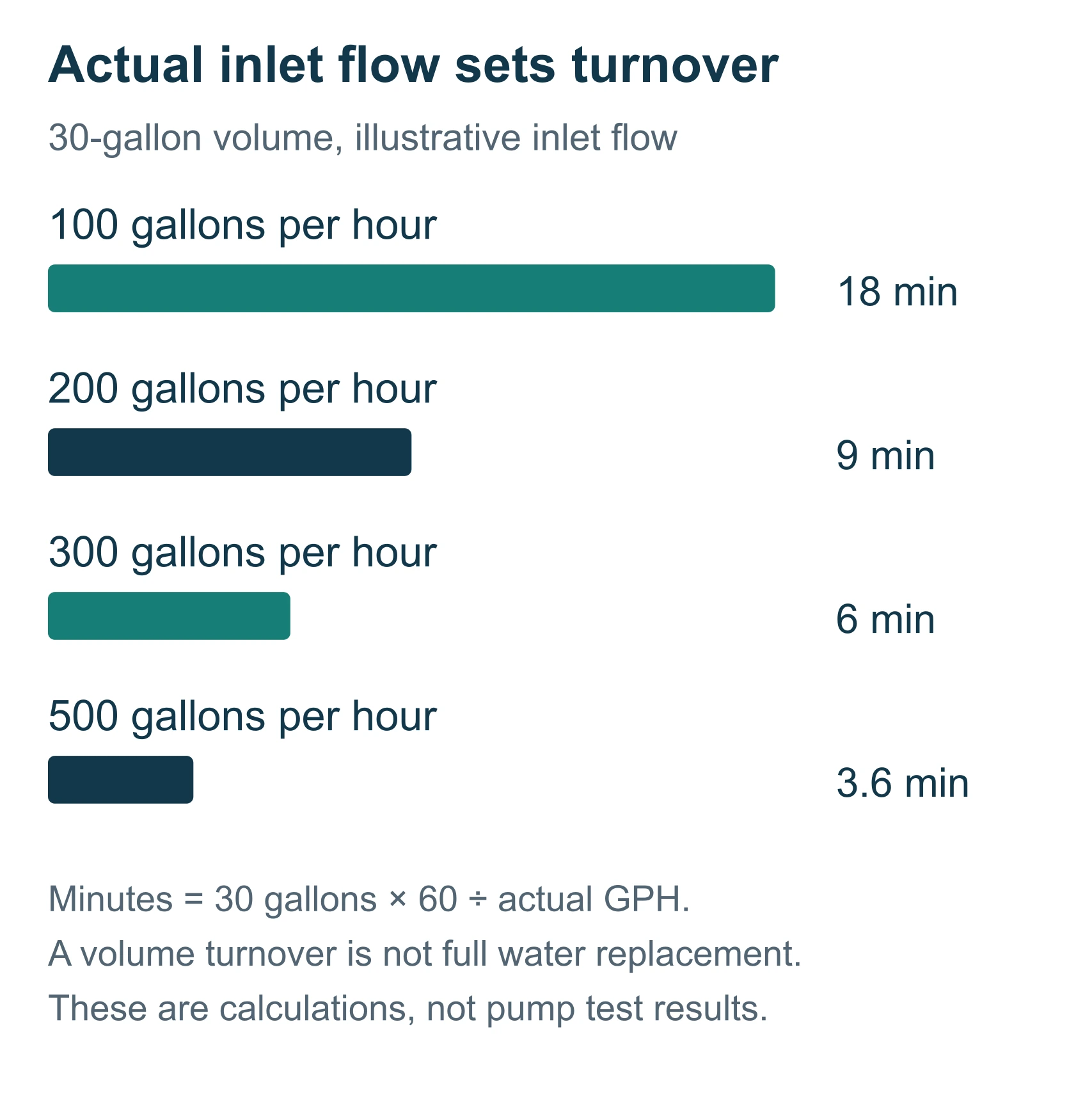
Manufacturers publish flow at a test bench. Nobody publishes how long that flow takes to turn over a specific 30-gallon tank, which is the number that actually tells you whether a pump suits your installation. This is our calculation, built from the manufacturers' own published figures, not a claim either manufacturer makes.
The method
- Take the manufacturer's derated flow figure at the published head height closest to your actual installation, not the zero-head number on the box.
- Convert that figure to minutes needed to turn over the tank's working volume: Minutes = working gallons × 60 ÷ derated GPH.
- Compare the result against your tank maker's stated exchange guidance. Pentair's own Bait Sentry documentation discusses both tank capacity and lift together for a reason: neither figure alone tells you whether a specific 30-gallon tank is properly served. Pentair installation manual
- Treat the result as a planning estimate, not a delivered figure, because your actual hose run, fittings and supply voltage will add resistance beyond the manufacturer's bench conditions. The conservative approach is to plan around the derated number, then confirm with your own measurement after installation.
Every figure in this table is our calculation from the manufacturers' published flow data, not a maker's claim, with the method shown above so you can rerun it for your own tank.
The 30-gallon turnover table (ours)
| Pump | Nominal rating | Head height used | Published flow at that head | Turnover time for 30 gallons (ours) |
|---|---|---|---|---|
| Shurflo Bait Sentry 500 | 500 GPH | 0 feet (open flow) | 500 GPH | 3.6 minutes |
| Shurflo Bait Sentry 500 | 500 GPH | 3 feet | 289 GPH | 6.2 minutes |
| Rule 500 GPH-rated model | 500 GPH | 0 feet (open flow) | 500 GPH | 3.6 minutes |
| Rule 500 GPH-rated model | 500 GPH | 3.35 feet | 340 GPH | 5.3 minutes |
| Shurflo Bait Sentry 800 | 800 GPH | 0 feet (open flow) | 800 GPH | 2.3 minutes |
| Shurflo Bait Sentry 800 | 800 GPH | at lift | Not published in the cited documentation | Not established |
At open flow, the two 500 GPH-rated pumps turn a 30-gallon tank over in the same 3.6 minutes, as arithmetic requires. Once real lift enters the picture, the gap opens: 6.2 minutes for the Shurflo at three feet versus 5.3 minutes for the Rule at 3.35 feet, a difference that comes from how each manufacturer's pump derates, not from either brand rounding a number favorably.
A worse condition than either row above is easy to create by accident. Add a long hose run, a couple of 90-degree fittings, a partially closed valve, or a supply voltage below the pump's rated input, and delivered flow at the tank inlet drops further than either manufacturer's derating curve alone predicts. Measure your own installed system with a marked container and a timer before trusting either row as your actual turnover time.
What extra rated flow costs you in placement and current draw
Every jump in rated flow inside this category is paid for somewhere else in the installation, and it's rarely the tradeoff a shopper expects.
Flooded-inlet placement is the first cost. Pentair's data sheet for the Bait Sentry 500 specifies a flooded inlet despite describing anti-airlock features, meaning the pump has to sit where the inlet stays submerged rather than relying on self-priming to compensate. Shurflo data sheet Pentair lists the Bait Sentry 800 with the same nominal inlet and outlet sizes as the 500, but the cited documentation does not confirm whether the 800 carries an identical flooded-inlet requirement. Confirm that detail from the exact document for the unit you're buying rather than assuming a like-for-like swap.
Electrical protection is the second cost, and it doesn't scale the way a shopper might guess. The Bait Sentry 500 data sheet specifies an external fuse and gives its recommended rating in that document. A higher-output pump in the same family is not guaranteed to use the same fuse rating, and reusing an old fuse because "it's the same brand" is a real way to leave a pump under-protected or a circuit nuisance-tripping. Use the document supplied for your exact model rather than carrying a rating over from a different one.
Read this against the alternative directly: a smaller pump that matches your tank's actual exchange requirement asks less of your mounting location and your electrical circuit than a larger one bought "to be safe." Size up only when a documented flow assessment, not a hunch at the counter, calls for it.
The flooded-inlet check almost nobody runs before buying
Most buying advice in this category stops at comparing GPH numbers on a spec sheet. The check that actually determines whether any of these pumps primes reliably on the water, rather than only at the dock, is whether the inlet stays flooded once the boat is underway and on plane, not just while it sits still.
Pentair's Bait Sentry instructions specifically address flooded operation and hose routing as installation requirements, separate from the pump's anti-airlock features. Bait Sentry installation manual A pump that primes fine tied to the dock can still starve the moment the bow comes up, if the inlet's mounting position was never checked against running trim.
The 30-second check almost nobody runs before buying: with the boat at its normal underway trim, not flat at the dock, locate the intake fitting and confirm it stays covered by water at that trim, not only at rest. If it doesn't, no pump's rated GPH will fix an intake that unloads once you're on plane, and that's a plumbing and trim problem a bigger pump cannot solve.
The best livewell pumps for a 30-gallon tank, with the compromises explained
Category boundary, stated plainly: these are aftermarket and OEM-style livewell pumps in the roughly 500 to 800 GPH nominal class, documented for use in 30-gallon-range saltwater bait tanks. They are grouped by the installation and service problem each one is best positioned to solve, not ranked as if one number wins outright.
A pricing and availability note: manufacturer part numbers and specification pages change, and prices are not published in this guide. Confirm current part numbers, fitment and pricing with an authorized dealer before ordering.
Shurflo Bait Sentry 500: Documented Starting Point, Modest Lift
Check Bait Sentry 500 on Amazon
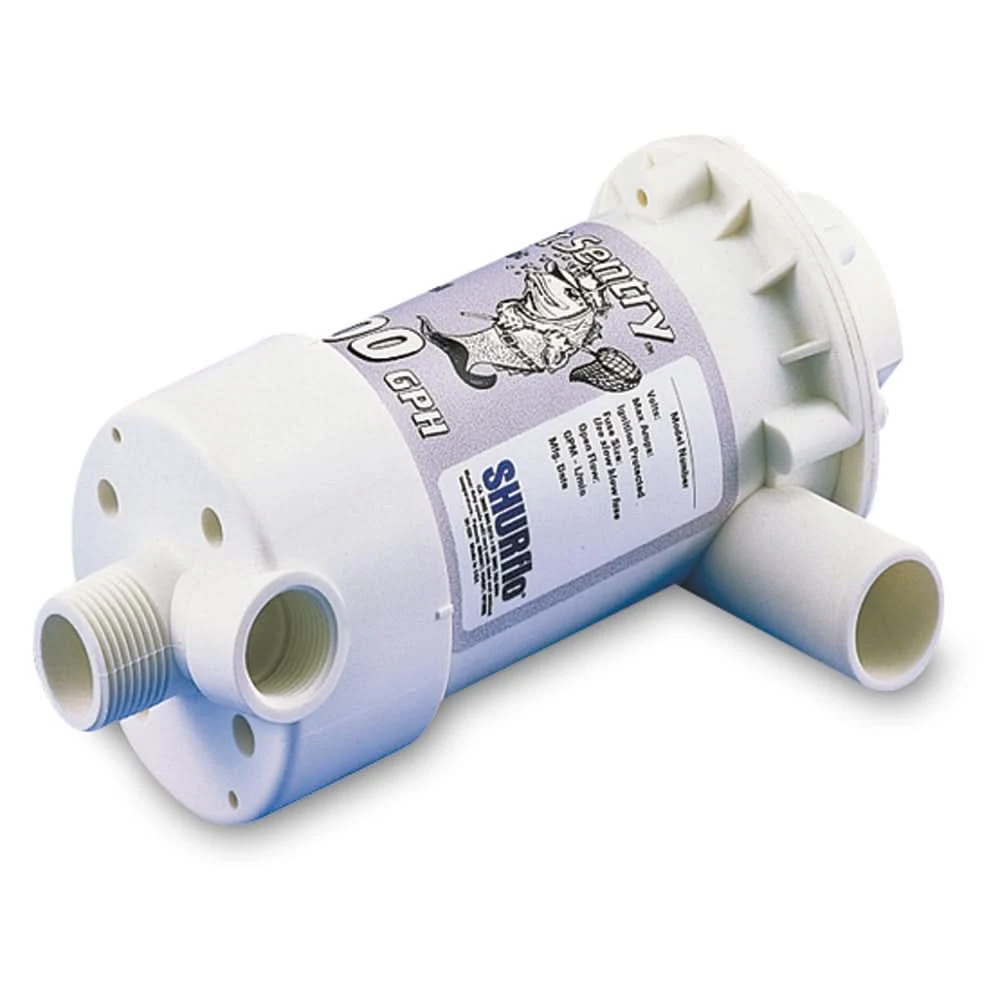
The 1700-001-030 earns this position on paperwork, not output. Pentair publishes its flow at two head points, 500 GPH at zero head and 289 GPH at three feet, which is enough to run a real fit check against your own lift before you hand over any money. Almost nothing else in this class gives you that. Pentair's own Bait Sentry guidance also references 30-gallon applications with this model, so the starting point is the manufacturer's, not ours.
| Aftermarket model | 1700-001-030 |
|---|---|
| Inlet | 3/4 inch NPT, flooded inlet required |
| Outlet | 3/4 inch hose barb |
| Nominal flow | 500 GPH at zero head |
| Derated flow | 289 GPH at 3 feet of head |
| Electrical protection | External fuse specified in the data sheet; confirm the exact rating for your unit |
Source: Shurflo Bait Sentry 500 data sheet, pentair.com, reviewed September 2026.
The 42 percent the box does not mention
Between zero head and three feet, this pump loses roughly 42 percent of its rated flow, per Pentair's own figures. Three feet is not an extreme lift either; it is what a great many 30-gallon transom installations actually see.
Run that 289 GPH through the turnover math above and a 30-gallon tank takes about 6.2 minutes to exchange, against 3.6 minutes at open flow. That gap is the whole argument for checking derated flow before buying, and it is also why the pump's published curve is worth more than a bigger number printed on a competitor's carton.
Where the flooded inlet has to sit
The data sheet specifies a flooded inlet despite the pump's anti-airlock features, which means the mounting position is a constraint rather than a preference. The pump has to live low enough that its inlet stays submerged at rest and at running trim, not just while the boat sits at the dock.
Fittings are fixed at 3/4 inch NPT in and 3/4 inch hose barb out, so there is no adapting your way around an awkward run. The data sheet also calls for an external fuse and gives the rating, and that rating belongs to this model rather than to the family.
Best for. A 30-gallon tank at modest lift where the mounting location can genuinely keep the inlet flooded.
Skip it if. Your installation cannot guarantee a flooded inlet at running trim, or a documented flow assessment already shows you need more than 289 GPH delivered at your actual lift.
Shurflo Bait Sentry 800: Conditional Step Up
The 1700-011-030 is the same family with a bigger number, sharing the 500's nominal inlet and outlet sizes so it can often drop into the same physical footprint. That makes it the sensible thing to evaluate before redesigning plumbing around a different pump family. It is a conditional pick rather than a default upgrade, because the condition is a documented flow shortfall you have actually measured.
| Aftermarket model | 1700-011-030 |
|---|---|
| Inlet and outlet | Same nominal sizes as the Bait Sentry 500 |
| Nominal flow | 800 GPH |
| Derated flow at lift | Not published in the cited documentation |
| Flooded-inlet requirement | Not confirmed as identical to the 500 in the cited page; verify separately |
Source: Shurflo Bait Sentry model specifications, pentair.com, reviewed September 2026. Derated flow at a stated head is not published for this model in the pages cited here.
The missing derating figure is the real catch
Pentair's cited documentation does not publish a flow figure for this model at any stated head height. At open flow the arithmetic gives 2.3 minutes to turn over 30 gallons, but nobody, including us, can tell you what it does at three feet from that source.
So the one number that would justify stepping up from the 500, delivered flow at your lift, is precisely the number you cannot look up. That does not make the pump a bad buy. It means the buying decision has to rest on your own measurement rather than the maker's table.
Same footprint does not mean same requirements
Matching nominal fitting sizes tempt people into treating this as a like-for-like swap. The cited page does not confirm that the 800 carries the same flooded-inlet requirement as the 500, and a higher-output pump in the same family is not guaranteed to use the same fuse rating either. Pull the document for the exact unit you are buying and check both before ordering, rather than carrying anything over from the smaller pump.
The deeper point is that extra rated flow repairs nothing upstream of the impeller. An unsuitable intake, a trapped-air condition or undersized drainage still needs diagnosis, and a larger box will not do it for you.
Best for. An installation where a documented flow assessment shows the 500-rated pump falls short of the tank's required exchange.
Skip it if. You are buying it as an untested cure for a weak-flow complaint nobody has diagnosed yet, or you need a published derated figure at lift before you commit.
Rule Tournament 401FC / 403FC: Best Exact Replacement
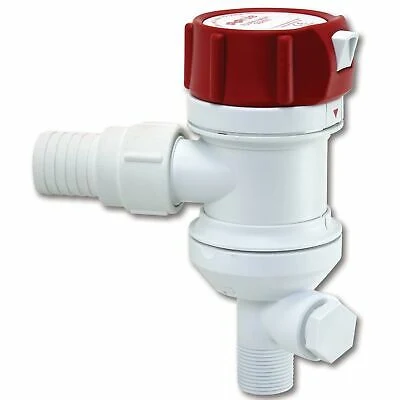
Rule splits its Tournament line into angled-inlet, straight-inlet and seacock configurations, and the 401FC and 403FC sit in the seacock group at nominal 500 and 800 GPH. That configuration choice is the actual product here. When the plumbing already worked and only the pump failed, matching the original arrangement is worth more than gaining flow, and Rule's documentation also identifies compatible replacement motor cartridges for service.
| Configuration group | Seacock-style inlet (Rule also offers angled-inlet and straight-inlet groups) |
|---|---|
| 401FC nominal flow | 500 GPH |
| 403FC nominal flow | 800 GPH |
| Related family derating figure | 340 GPH at 3.35 feet of head, published for Rule's 500 GPH-rated models |
| Service parts | Manufacturer-documented replacement motor cartridges |
Source: Rule Tournament Series model number table, xylem.com, reviewed September 2026, and Rule's 500 to 1100 GPH livewell pump performance and service manual, reviewed September 2026.
Why matching the inlet beats gaining GPH
Multiple inlet arrangements let you buy a pump that fits the boat, instead of re-plumbing the boat around a pump's fittings. That is a smaller job, a cheaper job, and one far less likely to introduce the fittings and hose bends that quietly cost you delivered flow at the tank inlet.
Rule's manual also names specific replacement cartridges, which gives you a repair path short of a full pump swap the next time this fails.
The model code is the part people get wrong
Similar-looking Rule models are easy to confuse, and the published family tables do not substitute for checking the exact code against the installation drawing and the parts actually aboard. Read the complete model code off the old pump first, then order.
The same caution applies to the flow figure. Rule publishes 340 GPH at 3.35 feet for its 500 GPH-rated models generally, worth about 5.3 minutes to turn over 30 gallons by our calculation, but confirm it applies to your specific 401FC before you use it for sizing. No matching figure for the 403FC is cited here.
Best for. Replacing a pump in a system that already worked, where matching the original configuration matters more than extra flow.
Skip it if. The system never worked properly to begin with, because ordering the same part again repeats the fault instead of diagnosing the installation.
Attwood Tsunami Aerator Mk2: Best For Service Access
Check Tsunami Mk2 T500 on Amazon
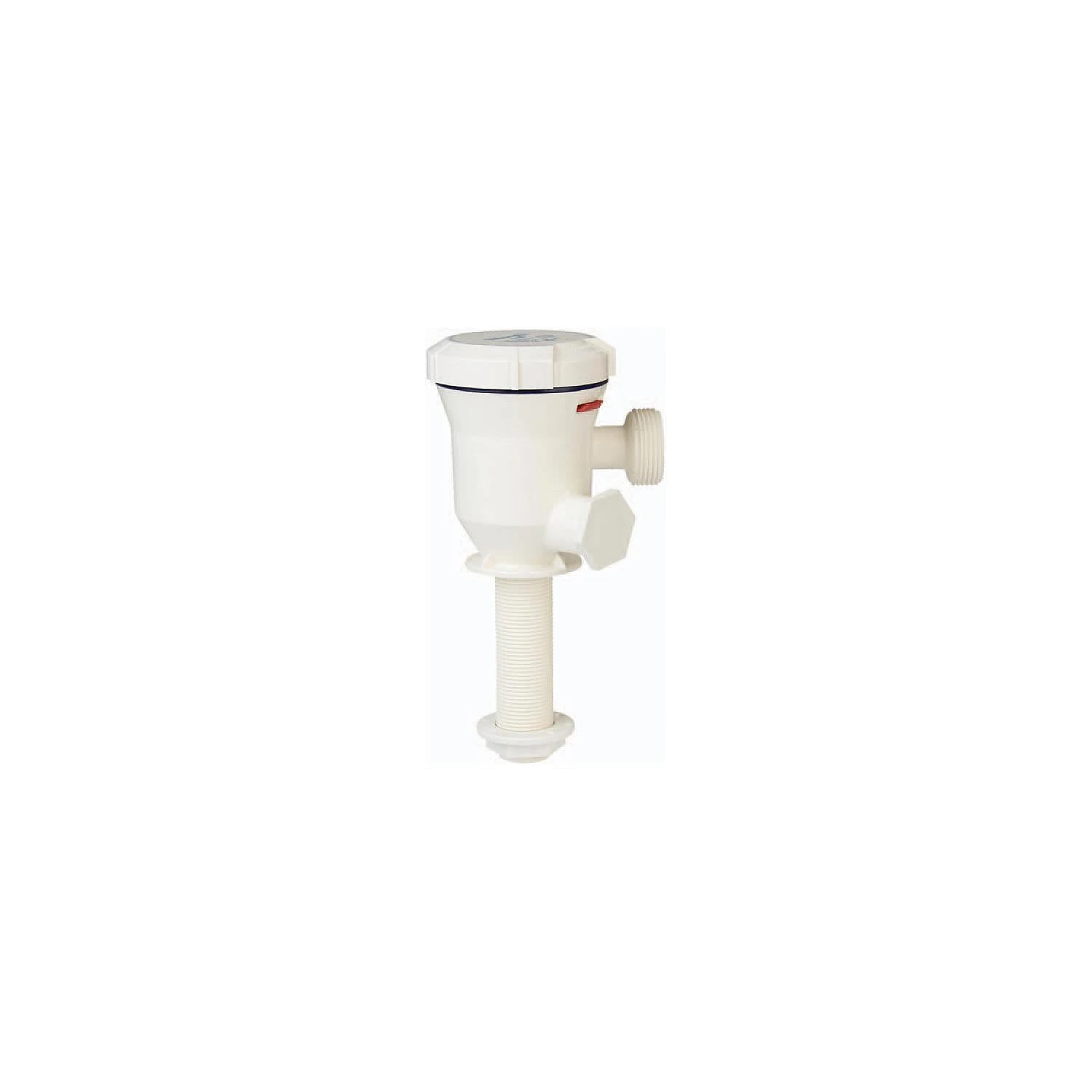
Attwood built the Mk2 around a cartridge you can pull without removing the whole housing, and packaged it with straight and 90-degree connection options for awkward mounting angles. That is a different kind of value from flow, and in a cramped compartment it is often the value that matters. Attwood also states compatibility with earlier Tsunami models, which can spare you a re-plumb on an older installation.
| Design focus | Serviceable cartridge, replaceable without removing the whole housing |
|---|---|
| Connection options | Straight and 90-degree packages |
| Flow rating | Model-dependent; select the exact aerator model and package |
| Backward compatibility | Attwood states compatibility with earlier Tsunami models; verify against your exact parts |
Source: Attwood Tsunami Aerator Mk2 product details, new.attwoodmarine.com, reviewed September 2026.
Measure the service envelope, not the footprint
The installed footprint tells you whether the pump fits. The service envelope tells you whether you can ever work on it again, and those are different measurements.
Cartridge access only pays off if there is physical room to withdraw the cartridge, so a low-clearance compartment defeats the design's main advantage entirely. Measure the withdrawal path before you buy, then compare it against what pulling a competing pump's cartridge would cost you in dismantled structure.
Serviceable is not the same claim as correctly sized
The flow rating here is model-dependent, so this guide cannot give you a single GPH figure until you have selected the exact model and package. Do that selection against your tank's required exchange, not against the design's service story, because a pump that is easy to maintain and still undersized has solved the wrong problem.
One more trap worth naming: Attwood's similarly named bilge-pump range is not an automatic substitute, shared branding notwithstanding. Buy the aerator that is documented for the bait-tank job.
Best for. A tight compartment where recurring service access, not raw flow, is the real complaint.
Skip it if. You have not confirmed the exact model's flow rating against your tank's requirement, or the compartment lacks the clearance to withdraw the cartridge.
Where each pump sits on flow versus installation flexibility
| Pump | Nominal flow | Derated flow published? | Installation flexibility | Where it sits |
|---|---|---|---|---|
| Shurflo Bait Sentry 500 | 500 GPH | Yes, at 0 and 3 feet of head | Flooded inlet required; fixed 3/4 inch fittings | Documented starting point for modest lift |
| Shurflo Bait Sentry 800 | 800 GPH | Not published at lift in the cited documentation | Same nominal fitting sizes as the 500; confirm flooded-inlet and fuse requirements separately | Conditional step up, not a default upgrade |
| Rule Tournament 401FC / 403FC | 500 / 800 GPH | 500 GPH-rated Rule models publish 340 GPH at 3.35 feet; a matching figure for the 403FC is not cited here | Angled-inlet, straight-inlet and seacock groups available; requires exact model match | Best exact replacement, not a flow leader |
| Attwood Tsunami Aerator Mk2 | Model-dependent | Not established without selecting the exact package | Straight or 90-degree connections; needs cartridge clearance | Best for service access over raw flow |
No pump in this table wins on flow and installation flexibility simultaneously. The Shurflo pair trades a fixed fitting size and a flooded-inlet requirement for documented performance data; the Rule pair trades a documentation gap at 800 GPH for configuration choice; the Attwood buys serviceability at the cost of a flow number this guide can't pin down for you in advance. Pick the axis your installation actually needs more of.
Diagnosing weak flow before you buy a replacement
A running pump with little or no discharge is a different problem from a pump that's simply undersized, and buying a bigger unit solves neither if the actual fault is upstream of the impeller. Start with the model's own troubleshooting instructions. Anti-airlock features do not remove the need for correct placement, a flooded supply where the manufacturer specifies one, and a hose route that doesn't trap air on the way to the tank.
| Symptom | What to establish before buying parts |
|---|---|
| No sound and no flow | Power supply, fuse, switch and connection condition |
| Motor runs, little water | Open supply path, priming condition and obstructions |
| Flow changes when moving | Intake behavior and the manufacturer's underway requirements |
| Weak flow after maintenance | Correct assembly, valve position and hose routing |
| Repeated circuit trip | Electrical or mechanical fault requiring diagnosis, not a bigger fuse |
Treat this table as an inspection order, not a remote diagnosis. Stop replacing fuses if a circuit repeatedly trips, and find the underlying cause instead.
Building a service kit you'll actually use
Buy compatible service parts only after confirming the exact model, and label them clearly so a future replacement doesn't start with another search through indistinguishable cartridges. Useful items typically include the approved spare motor assembly, correct seals, appropriately sized hose and the specified electrical protection, limited to parts that belong to your documented installation.
Rule's own manual instructs isolating the through-hull fitting and disconnecting power before removing a cartridge, and a spare cartridge on the shelf is not permission to open a flooded assembly without those precautions. Rule service instructions
For a professional quote, send the installer photographs of the pump, the tank details, and a plain description of the actual failure. "Works at rest, loses flow underway" gives a technician far more to work with than "needs a stronger pump." Request a commissioning check once the repair is complete.
Do you need a new pump at all?
Not every weak-flow complaint is a pump problem, and not every working system needs an upgrade. If the plumbing worked well before the fault appeared, the first option to assess is an exact replacement of the failed part, not a larger one. Preserve plumbing that's still serviceable, correct any deterioration in the wiring or hose, and verify operation after the repair before concluding the tank needs more flow than it had.
Where the manufacturer lists a compatible replacement cartridge and the surrounding housing is still sound, replacing only that cartridge can resolve the failure without a full pump swap. Check the complete model and the housing's condition before choosing that route over a full replacement.
Change pump size only when a documented assessment, comparing your tank's required exchange against a measured or calculated turnover time, actually calls for it. Buying more GPH because the old pump failed is treating a size increase as a diagnosis, and in a meaningful share of cases the size was never the fault.
Frequently asked questions
Is 800 GPH automatically better than 500 GPH for a 30-gallon tank?
No. Extra nominal output is not evidence of better bait care or a better match to your tank's drain. Compare each pump's derated flow at your actual head height, and your tank maker's required exchange, before assuming the larger number solves anything. A 500 GPH pump correctly sized to your lift can outperform an 800 GPH pump installed with a flooded-inlet violation.
Can I replace only the motor cartridge instead of the whole pump?
Possibly, when the manufacturer lists a compatible cartridge and the rest of the assembly is still serviceable. Check the complete pump model number and the condition of the housing before choosing this route. It's a reasonable repair path for a pump that otherwise worked well, not a way to avoid diagnosing a genuinely undersized system.
Can I use a bilge pump instead of a dedicated livewell pump?
Select a pump approved for the intended bait-tank application and installation instead. Similar appearance or a similar flow rating on the box does not establish equivalent fittings, duty cycle, or mounting requirements between a bilge pump and a livewell pump, even within the same manufacturer's broader product range.
Does an anti-airlock design mean the pump is self-priming?
No. Shurflo's own data sheet for the Bait Sentry 500 specifies a flooded inlet despite describing anti-airlock features, meaning correct mounting still matters even with that feature present. Don't treat anti-airlock language on a listing as permission to skip the flooded-inlet check described earlier in this guide.
Can a washdown pump share the livewell's intake?
Some Bait Sentry and Rule configurations provide an additional port for this. Use only the manufacturer's intended arrangement for your exact model, and have the combined installation checked by someone familiar with both circuits rather than improvising a shared line.
What should I buy if my system previously worked well and just failed?
An exact replacement is the first option to assess once you've identified the actual failure. Preserve plumbing that's still suitable, correct any deterioration in the wiring or hose, and verify operation after installation. Change pump size only when a documented flow assessment gives you a specific reason to, not because the old pump happened to fail.
Final verdict
The GPH printed on a livewell pump's box describes a bench test, not the flow your 30-gallon tank will actually receive, and the turnover-time math in this guide, built from each manufacturer's own derated figures, is the number that tells you more. The Shurflo Bait Sentry 500 is the documented starting point for modest lift; step up to the 800 only after a real flow assessment shows the smaller pump is short. Reach for a correctly matched Rule Tournament unit when the goal is an exact replacement of plumbing that already worked, and consider the Attwood Tsunami Aerator Mk2 when service access, not flow, is the actual complaint. Run the flooded-inlet check and diagnose before you replace, not after you've already bought the bigger box.
Related reading
Sources
Specifications on this page were taken from manufacturer data sheets, installation manuals and specification tables, consulted September 2026. Prices and specifications change; confirm current figures with an authorized dealer before ordering.
- Shurflo Bait Sentry pump family product and specification pages, pentair.com, reviewed September 2026
- Shurflo Bait Sentry 500 data sheet (aftermarket model 1700-001-030), pentair.com, reviewed September 2026
- Shurflo Bait Sentry installation and operation manual (911-466 MagDrive), pentair.com, reviewed September 2026
- Rule Tournament Series model number and configuration table, xylem.com, reviewed September 2026
- Rule 500 to 1100 GPH livewell pump performance and service manual, prod.xylem.com, reviewed September 2026
- Attwood Tsunami Aerator Mk2 product details, new.attwoodmarine.com, reviewed September 2026
Join The ReefReady Community
Get saltwater Fishing Guides, expert Buyers Guides, equipment recommendations, marine electronics insights, and practical gear tips delivered to your inbox.
No spam. Unsubscribe in one click.